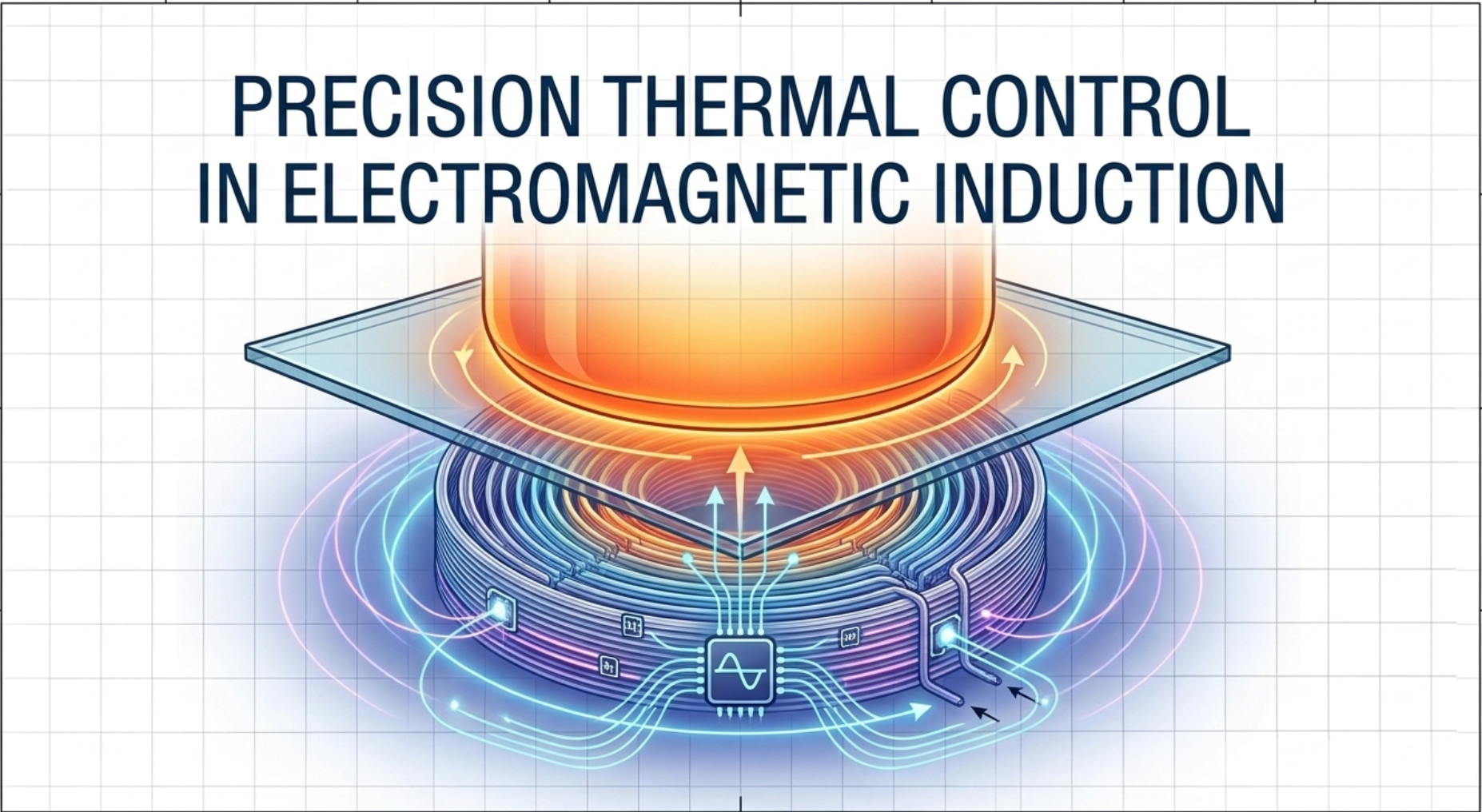
Induction heating has revolutionized both industrial processing and modern kitchens. Known for its thermal efficiency and precision, it is often seen as a “magic” heat source. However, the science behind it—specifically the sounds it produces—is rooted in complex physics.
How Induction Technology Works
Unlike traditional heating, induction technology does not use a heating element. Instead, it relies on electromagnetic induction to generate heat directly within the cookware or workpiece.
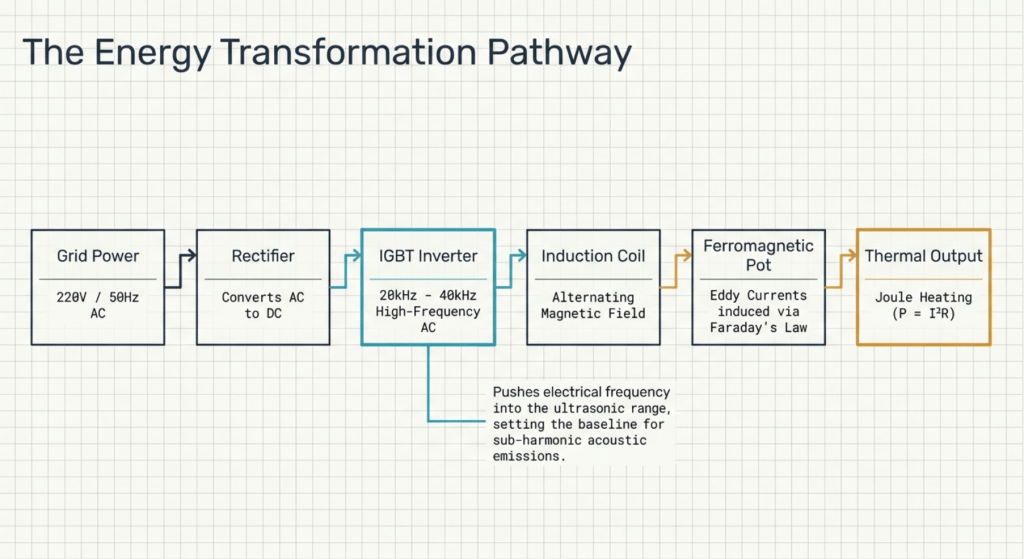
- High-Frequency Magnetic Fields: The unit converts standard electricity into high-frequency alternating current (20 kHz to 40 kHz).
- Eddy Currents: This current flows through a copper coil, creating a dynamic magnetic field. When a ferromagnetic pot is placed on top, eddy currents are induced in the metal.
- Joule Heating: The resistance of the metal converts these currents into heat ($P = I^2 R$), heating the food rather than the glass surface.
Why Does My Induction Cooktop Make Noise?
For many users, the “humming” or “clicking” of an induction system can be concerning. These sounds are actually signs of the physics at work.
1. The Physics of Vibration
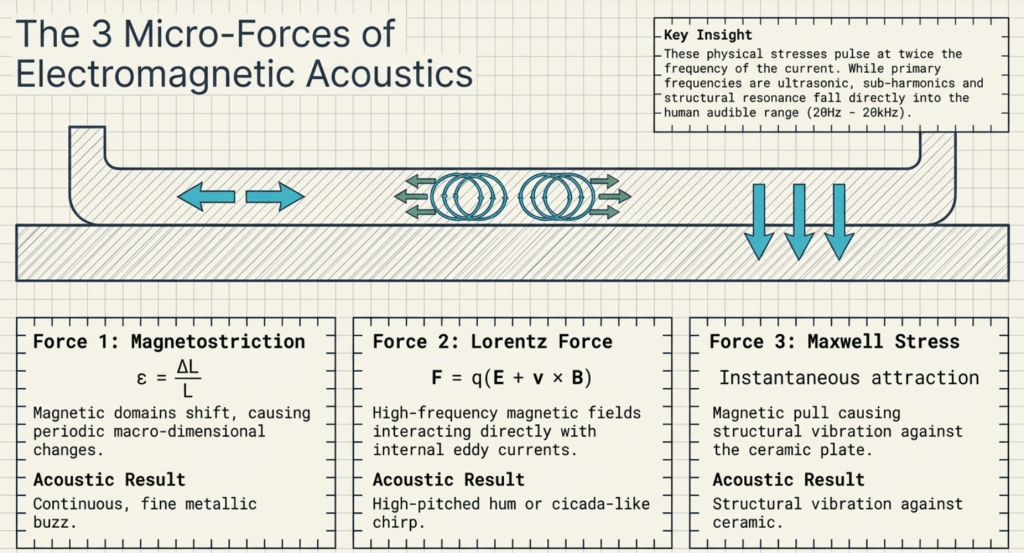
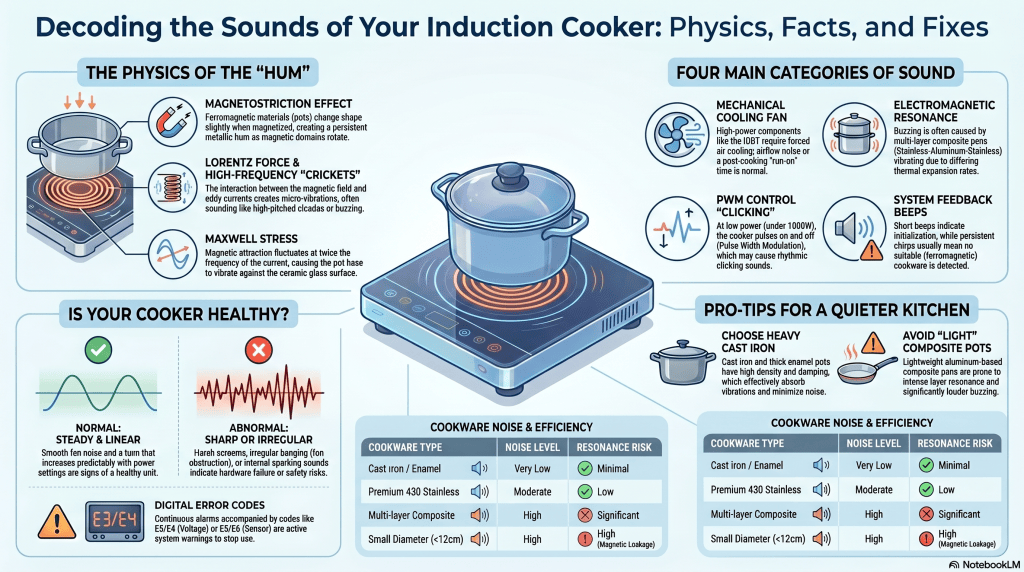
- Magnetostriction: As the magnetic field fluctuates, the molecules in the iron pot physically expand and contract, creating a faint “buzz”.
- Lorentz Force & Maxwell Stress: These forces cause microscopic vibrations in the metal layers of the cookware, often resulting in high-pitched “chirping”.
- Interlayer Stress: Modern multi-clad pans (stainless steel + aluminum) may vibrate at the seams where different metals meet.
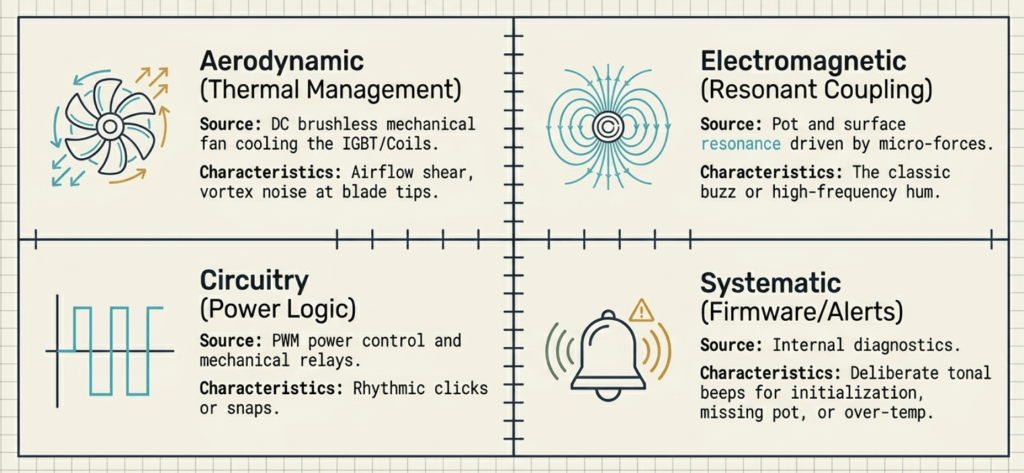
2. Mechanical Cooling
Because components like the IGBT (Insulated Gate Bipolar Transistor) generate heat during power conversion, high-quality units use cooling fans. The air-cutting sound of the fan is a normal protective logic to ensure the longevity of the electronics.
3. The “Clicking” of PWM
At low power settings, the system uses Pulse Width Modulation (PWM). It cycles the power on and off to maintain a simmer, which may produce a rhythmic “clicking” sound from the internal relays.
Optimizing Your Induction Experience
To achieve the quietest and most efficient performance, consider the following:
- Cookware Selection: Use heavy, cast iron or high-quality magnetic stainless steel. Heavier pans provide better acoustic damping.
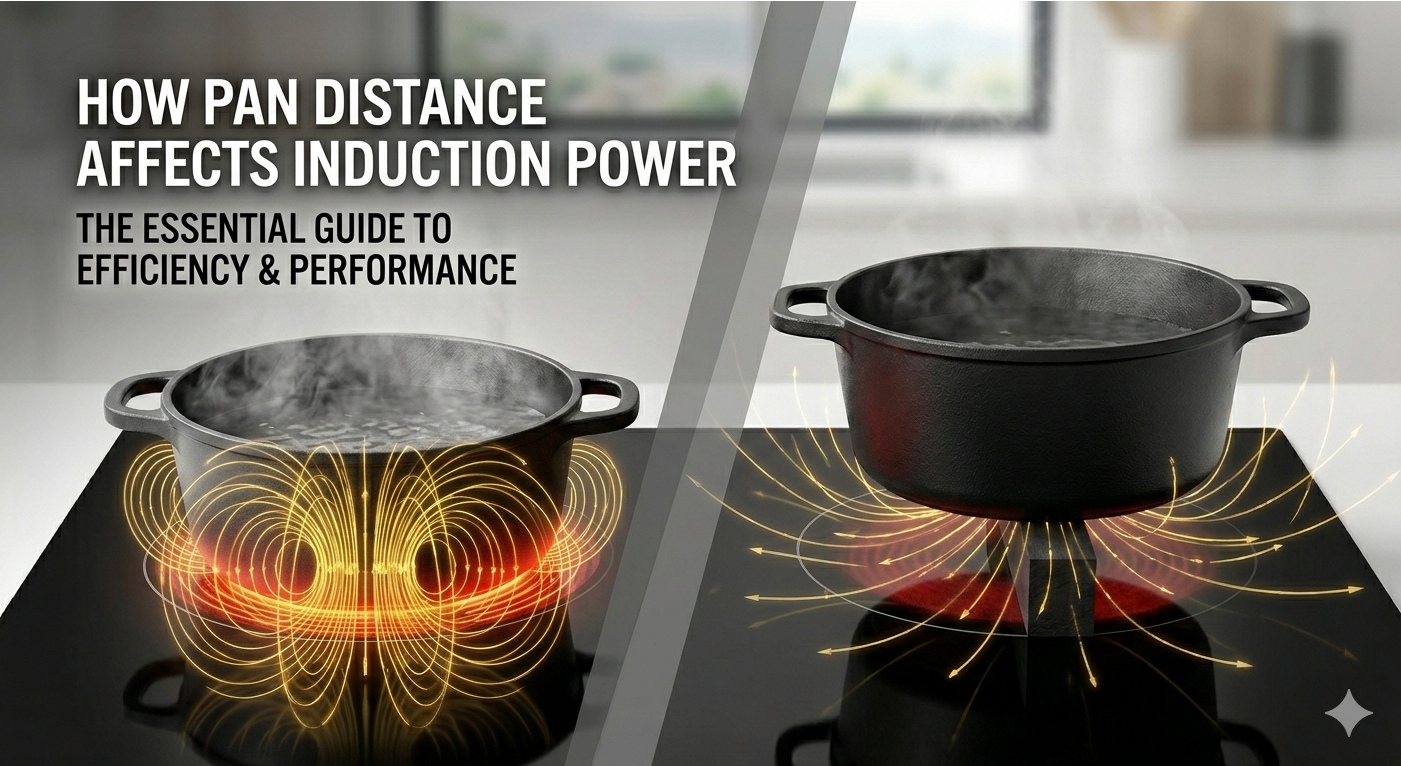
- Proper Sizing: Ensure the base of the pan matches the size of the heating zone to prevent “stray” magnetic fields and excess vibration.
- Surface Contact: A flat, clean bottom ensures stable contact and reduces the “chatter” caused by Maxwell stress.
Summary of Acoustic Indicators
| Sound Type | Potential Cause | Status |
| Steady Hum | Magnetostriction / Normal Power | Normal |
| Rhythmic Click | PWM Power Cycling (Low heat) | Normal |
| Loud Grinding | Fan obstruction or bearing wear | Requires Check |
| Crackling/Sparks | Electrical arcing or moisture | Danger: Disconnect |
Conclusion
Induction heating represents the pinnacle of thermal efficiency in modern engineering. By understanding the underlying physics—from Lorentz forces to aerodynamic cooling—users can better appreciate the performance of their equipment and distinguish between normal operational sounds and actual mechanical faults.