Meta Description: Discover how ferrite strips optimize induction heating. Learn about magnetic flux concentration, shielding, and how they protect induction cooktop circuits.
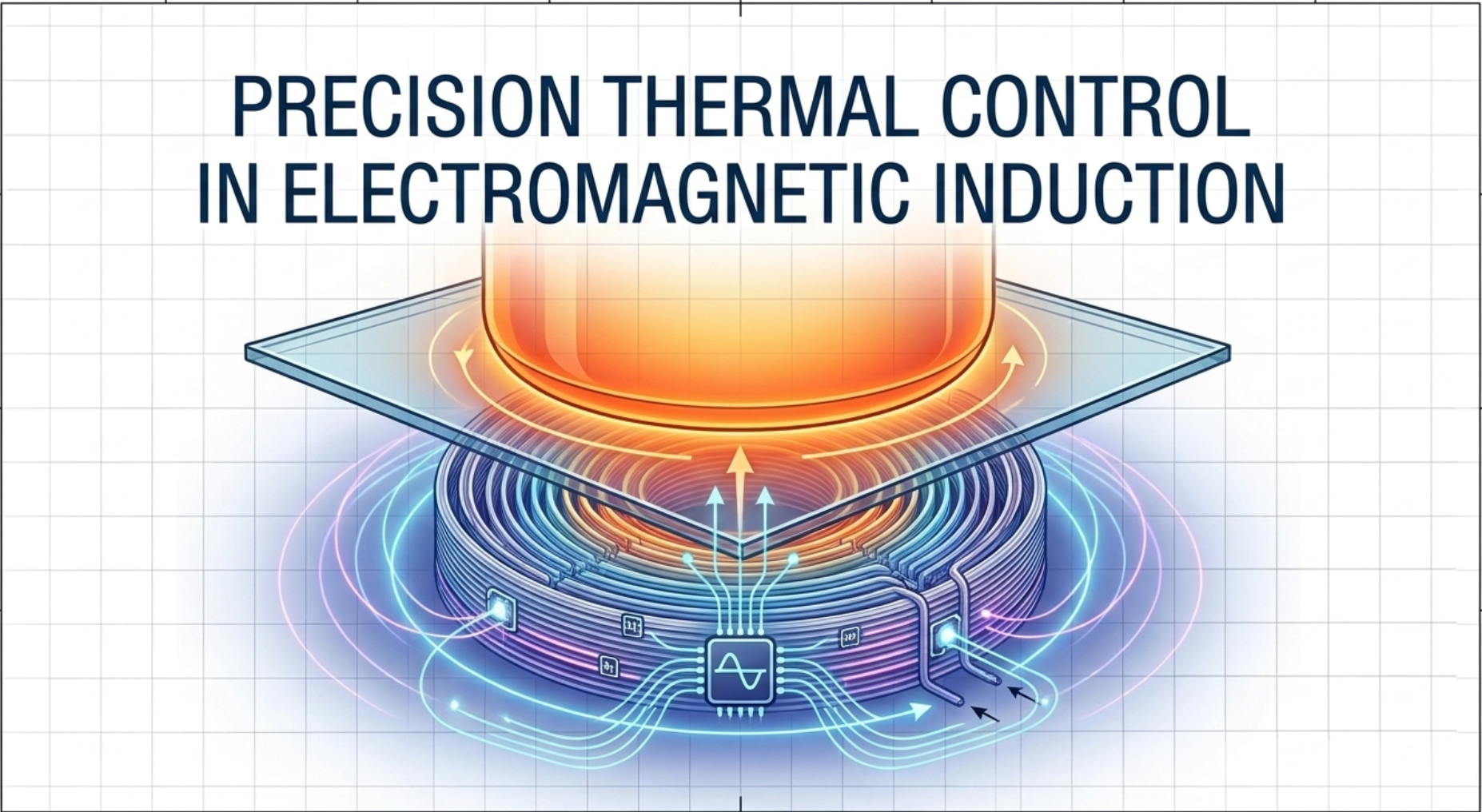
In the world of induction heating technology, efficiency isn’t just about speed—it’s about the precision of the electromagnetic field. Whether in a professional kitchen or an industrial smelting plant, the “heart” of the system is the induction coil. However, the unsung hero that ensures this energy reaches the pot and not the internal electronics is the Ferrite Strip.
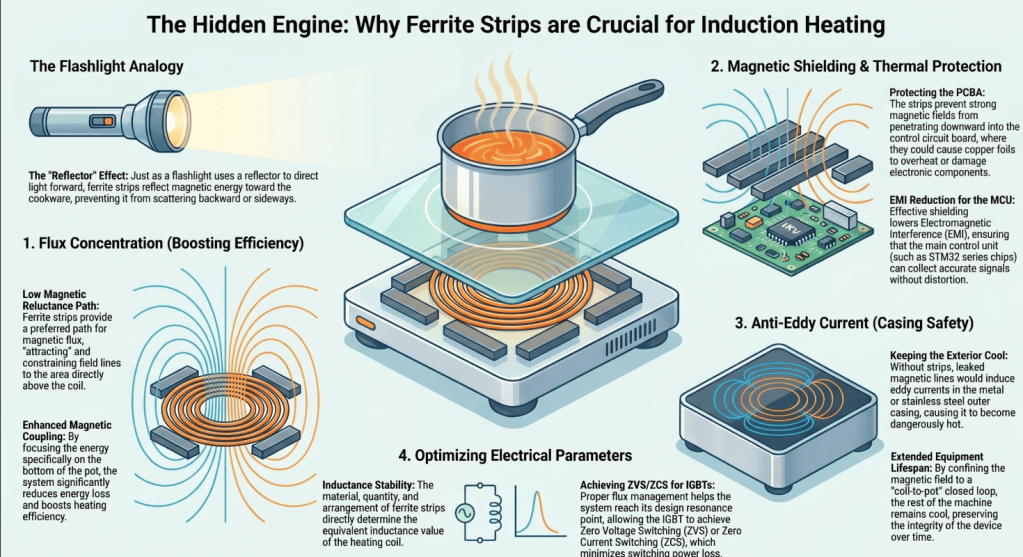
1. Flux Concentration: Directing the Power
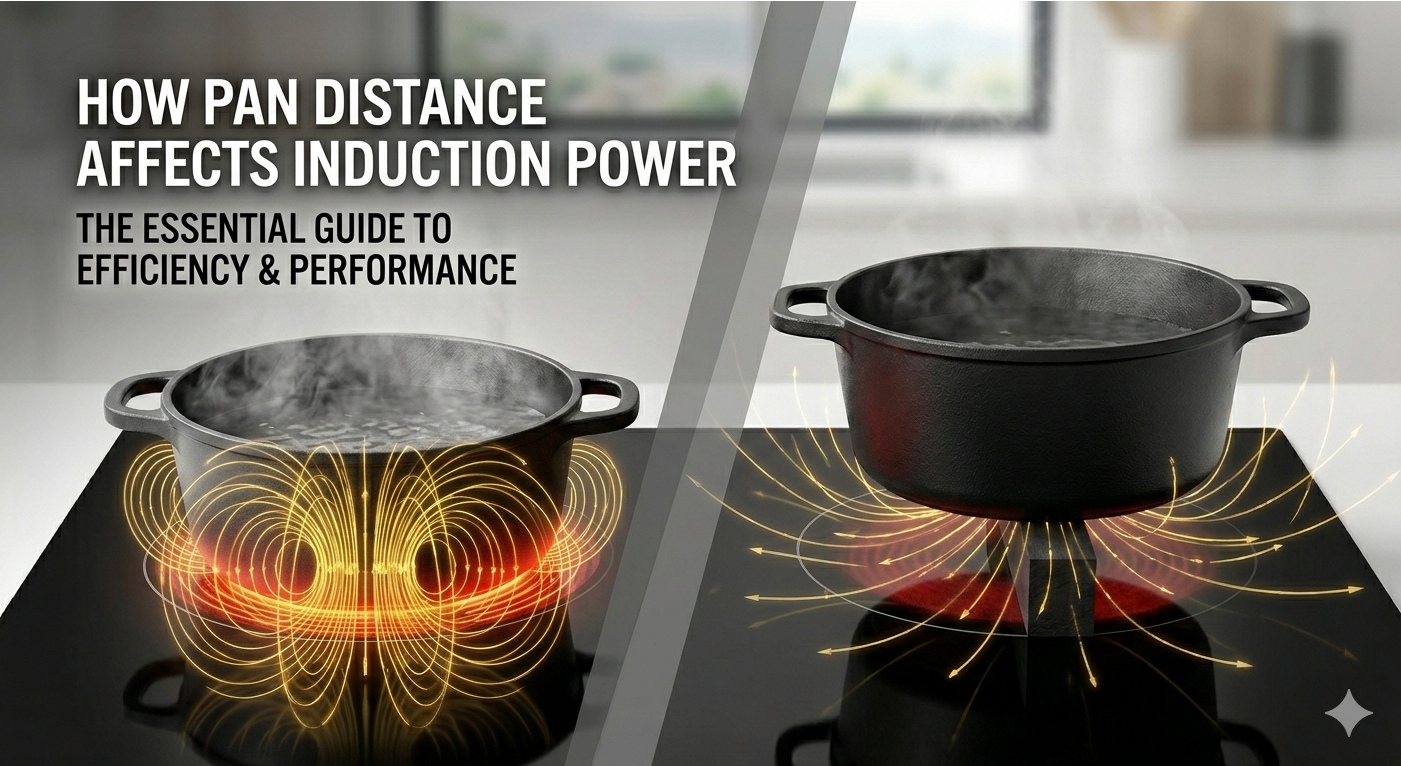
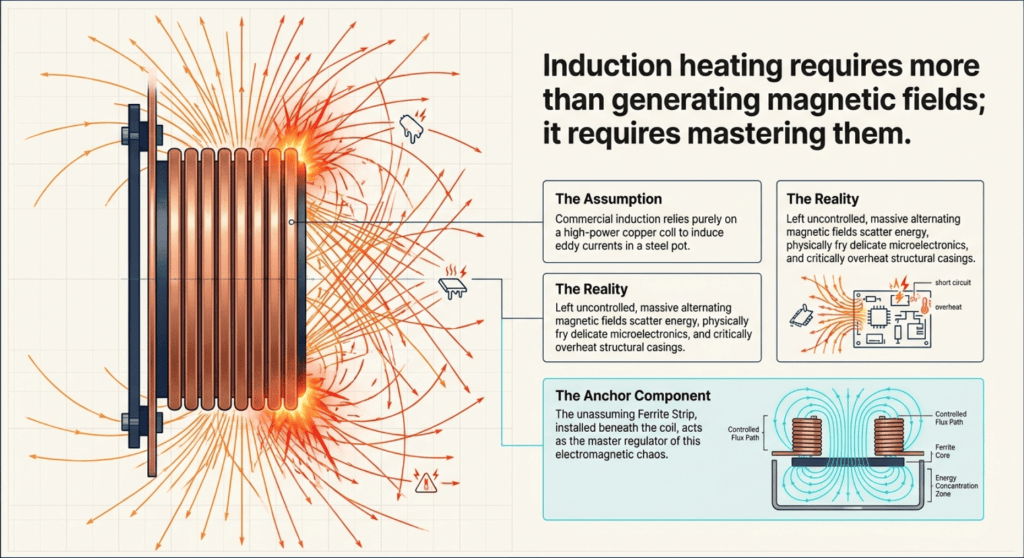
The core principle of induction heating involves an alternating magnetic field generating eddy currents. Without intervention, magnetic field lines disperse in all directions.
- The Solution: Ferrite strips provide a path of low magnetic reluctance.
- The Result: Like a reflector in a flashlight, these strips “attract” and constrain magnetic lines, focusing them upward toward the vessel. This maximizes magnetic coupling and significantly reduces energy waste.

2. Magnetic Shielding: Protecting the Core
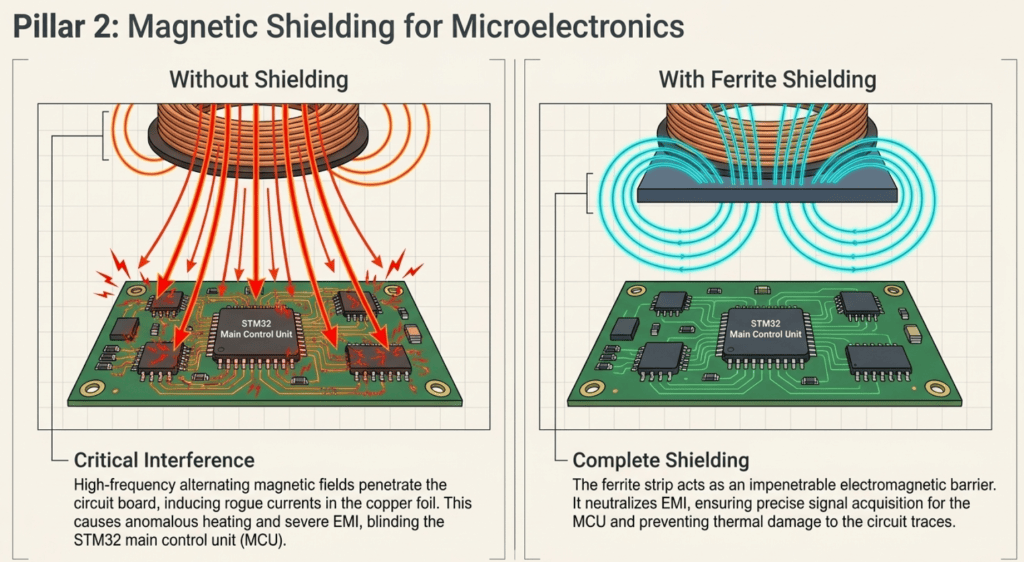
A high-power induction cooktop generates intense electromagnetic fields that can be hazardous to its own internal “brain”—the PCBA (Printed Circuit Board Assembly).
- Heat Protection: By constraining the magnetic path, ferrite strips prevent the field from penetrating downward into the copper foils of the circuit board.
- Signal Integrity: This shielding reduces Electromagnetic Interference (EMI), ensuring that microcontrollers (like the STM32 series) receive accurate data without “noise”.
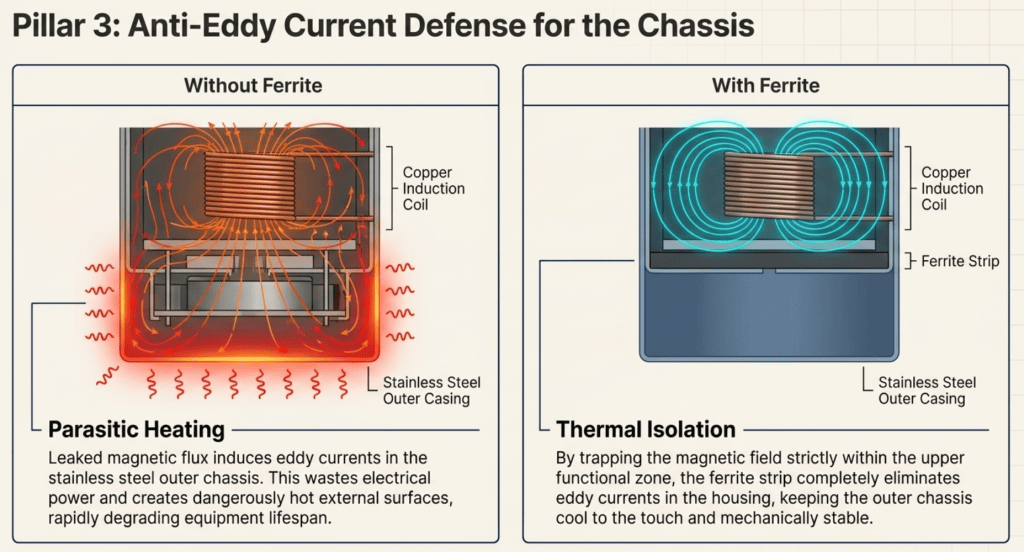
3. Anti-Eddy Current: Preventing Housing Overheat
Most commercial induction systems utilize stainless steel or metal housings. Without ferrite strips, leaked magnetic flux would cause the outer casing to heat up via induction.
- Safety First: By creating a closed-loop “Coil-to-Pot” magnetic circuit, the strips keep the external chassis cool to the touch.
- Longevity: This localized cooling prevents thermal stress on the mechanical structure, extending the lifespan of the equipment.
4. Inductance Stability and Resonance
From a circuit design perspective, the induction coil is a massive inductor. The arrangement and quality of ferrite strips directly impact the Equivalent Inductance Value.
- Impedance Matching: Ferrite strips help the system reach its designed resonance point.
- Soft Switching: This allows the IGBT (Insulated Gate Bipolar Transistor) to achieve Zero Voltage Switching (ZVS) or Zero Current Switching (ZCS), which dramatically lowers switching losses and prevents hardware failure.
Conclusion: The “Reflector” of Induction
If the induction coil is the bulb, the ferrite strips are the parabolic reflector. By managing the electromagnetic field with surgical precision, these components ensure that induction technology remains the most efficient and safest heating method available today.