





If you use an induction cooktop at home or work with induction heating in an industrial factory, you might have noticed something interesting: if a pan is lifted, warped, or not placed perfectly flat, the heating power drops immediately.
But why does distance matter so much in induction technology? How induction cooktops work when the pan moves away from the surface?
In this quick, easy-to-understand guide, we will explain how the distance (or air-gap) between your pan and the stove controls heating power and efficiency.
1. The Science: Why Distance Matters in Induction Technology
Unlike gas stoves that use an open flame, an induction cooktop relies on an invisible magnetic connection.
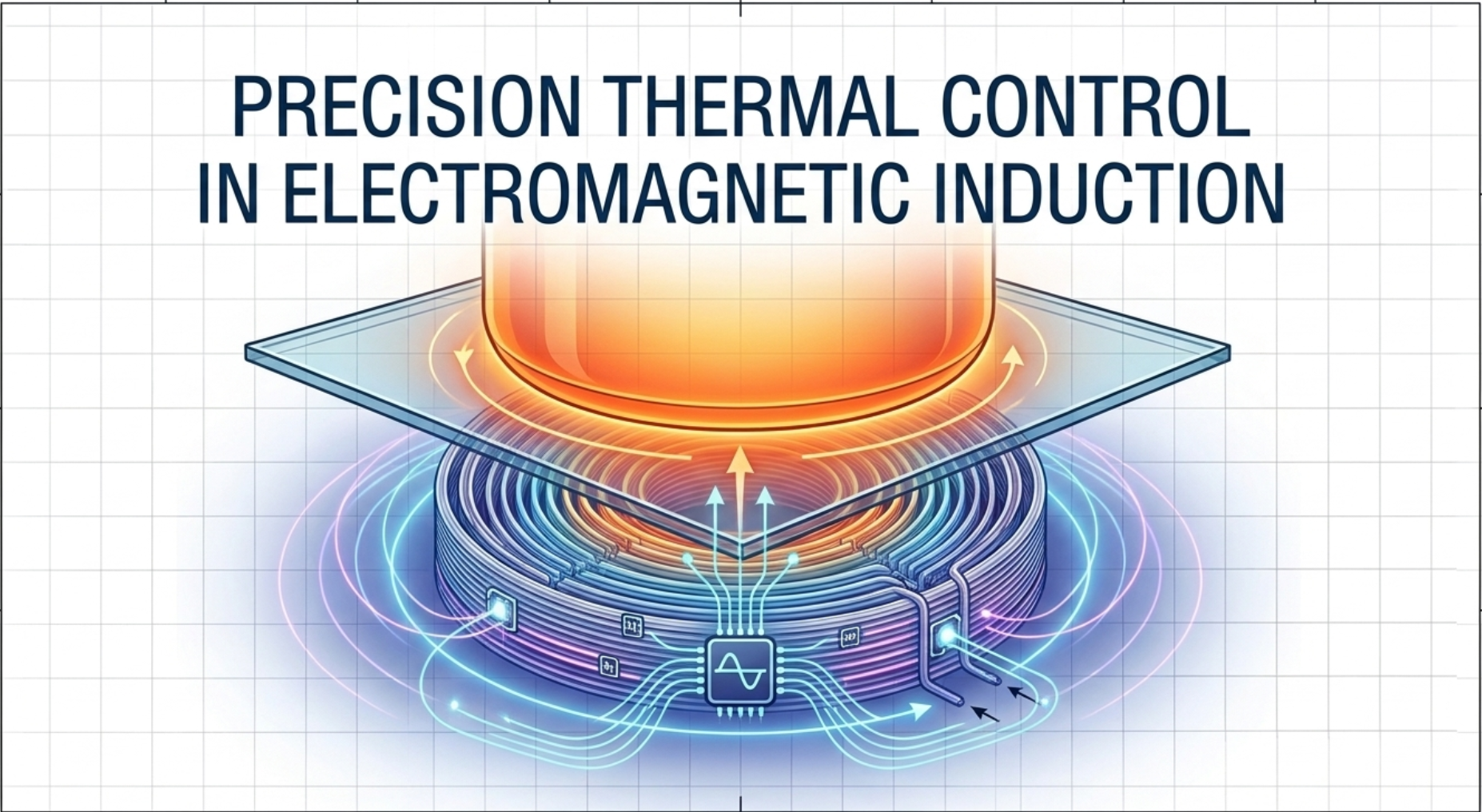
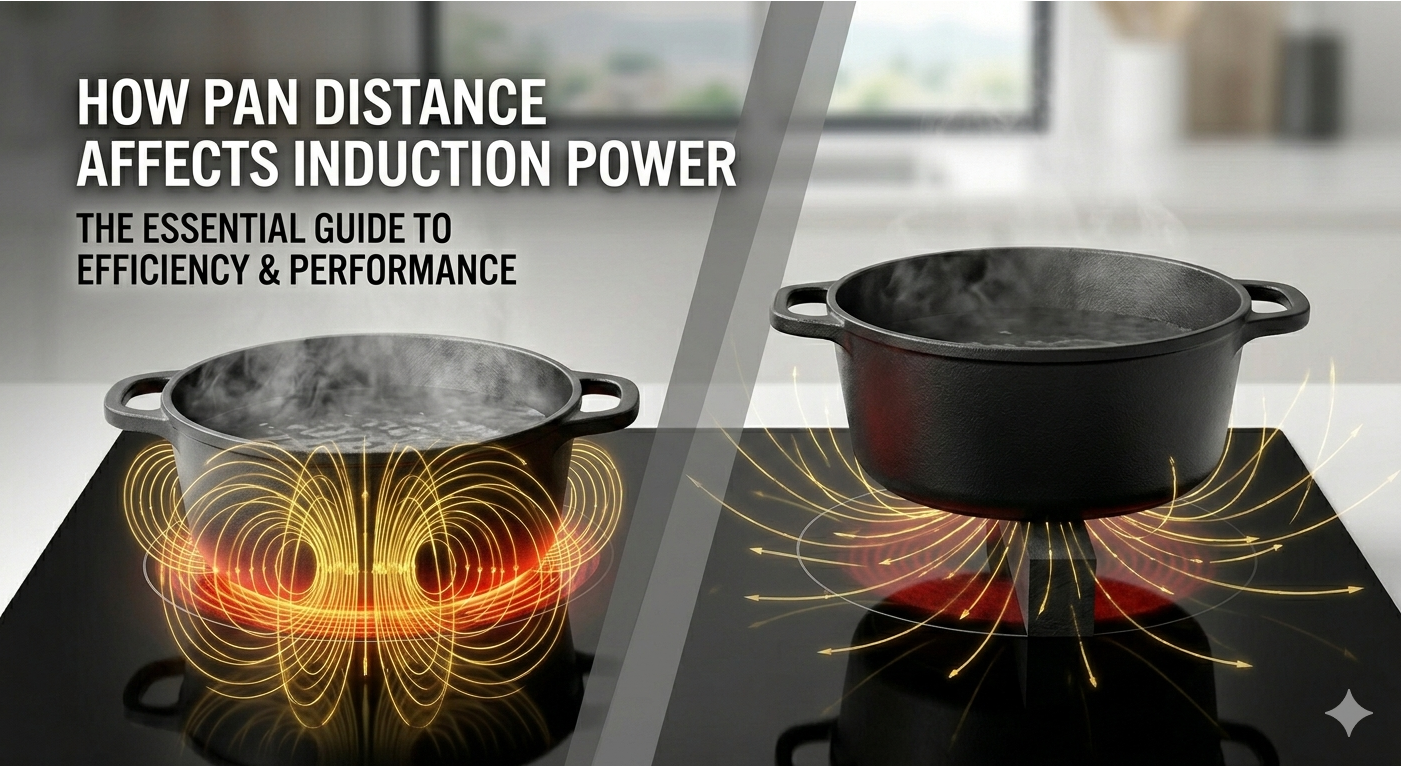
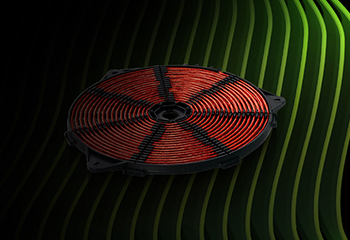
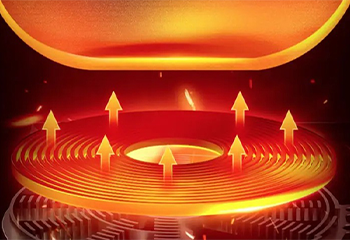
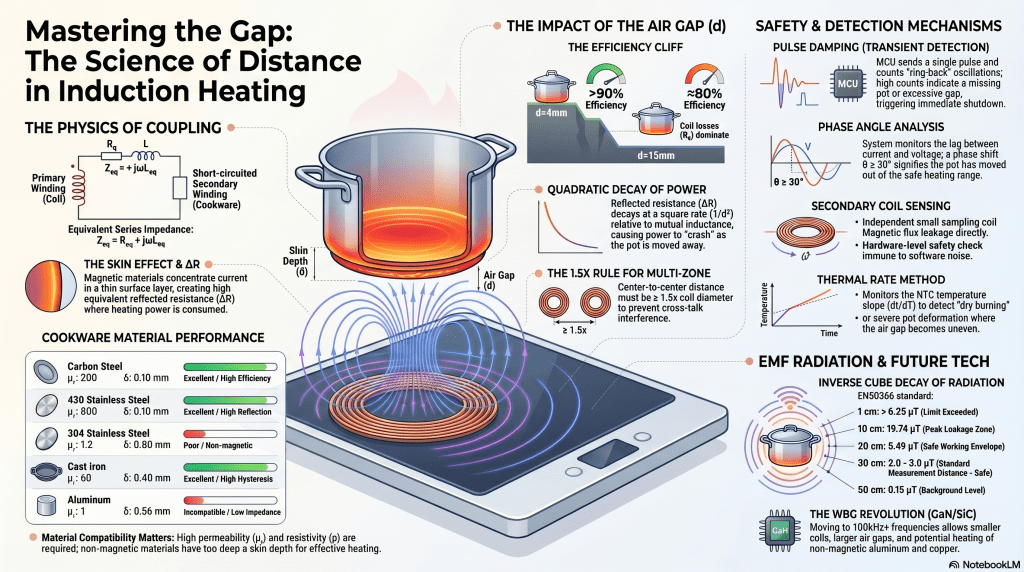
Inside the stove, there is a copper coil. When turned on, it creates an alternating magnetic field. When a magnetic pan sits flat on the glass, this magnetic field penetrates the bottom of the pan, creating swirling electrical currents called eddy currents. These currents instantly turn into heat due to the metal’s natural resistance.
Because this connection is entirely magnetic, distance is everything. Magnetic fields weaken very quickly as they travel through the air. Even a tiny increase in the gap between the coil and the pan can break this invisible energy chain.

2. What Happens When the Distance Increases?
When your pan gets further away from the induction coil—either because you lifted the pan, or because the bottom of the pan is warped—the stove undergoes three major changes:
- The Energy Chain Breaks: The magnetic field struggles to reach the pan. The stove’s ability to transfer energy drops sharply.
- Power Output Drops: To protect its internal electronic components from overheating, the smart system inside the cooktop will automatically turn down the power.
- The Stove Shuts Off: If you lift the pan too high (usually more than 3 to 5 cm), the stove will stop heating entirely, flash a “no pan” error code, and safely shut itself off.
3. The Power and Efficiency Chain
To see exactly how distance alters the efficiency of induction technology vs gas or standard electric stoves, look at this simple breakdown:
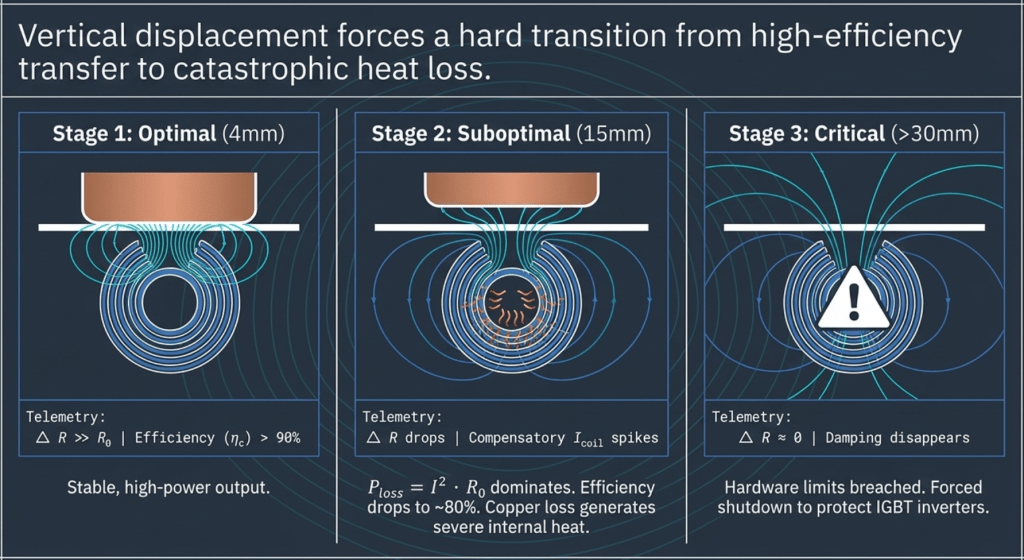
- Perfect Distance (0 to 4mm): The pan is flat on the glass. The magnetic connection is incredibly strong, reaching a thermal efficiency of over 90%. You get maximum cooking power and the fastest boiling times.
- Large Distance (Around 15mm): The pan is slightly lifted or has a severely warped bottom. The energy link weakens, and efficiency drops down to around 80%. The stove has to work much harder just to give you basic heat.
- Extreme Distance (Over 30mm): The pan is too far away. The energy connection hits zero, and the power is completely cut off to keep the system safe.
Conclusion
The golden rule of induction heating is simple: keep it flat and keep it close.
An induction cooktop offers unmatched speed and energy saving, but it needs a tight magnetic connection to work its magic. To get the highest power and best performance from your induction technology, always use high-quality, flat-bottomed cookware that stays flat against the stovetop surface.