





Whether you are looking for a professional-grade extra burner for your kitchen or a reliable source of heat for a power outage, choosing between induction technology, gas, and electric options requires understanding their distinct advantages. Our team has rigorously tested all three types to help you decide which induction cooktop or traditional burner fits your lifestyle.
1. The Science of Induction Heating: Maximum Efficiency
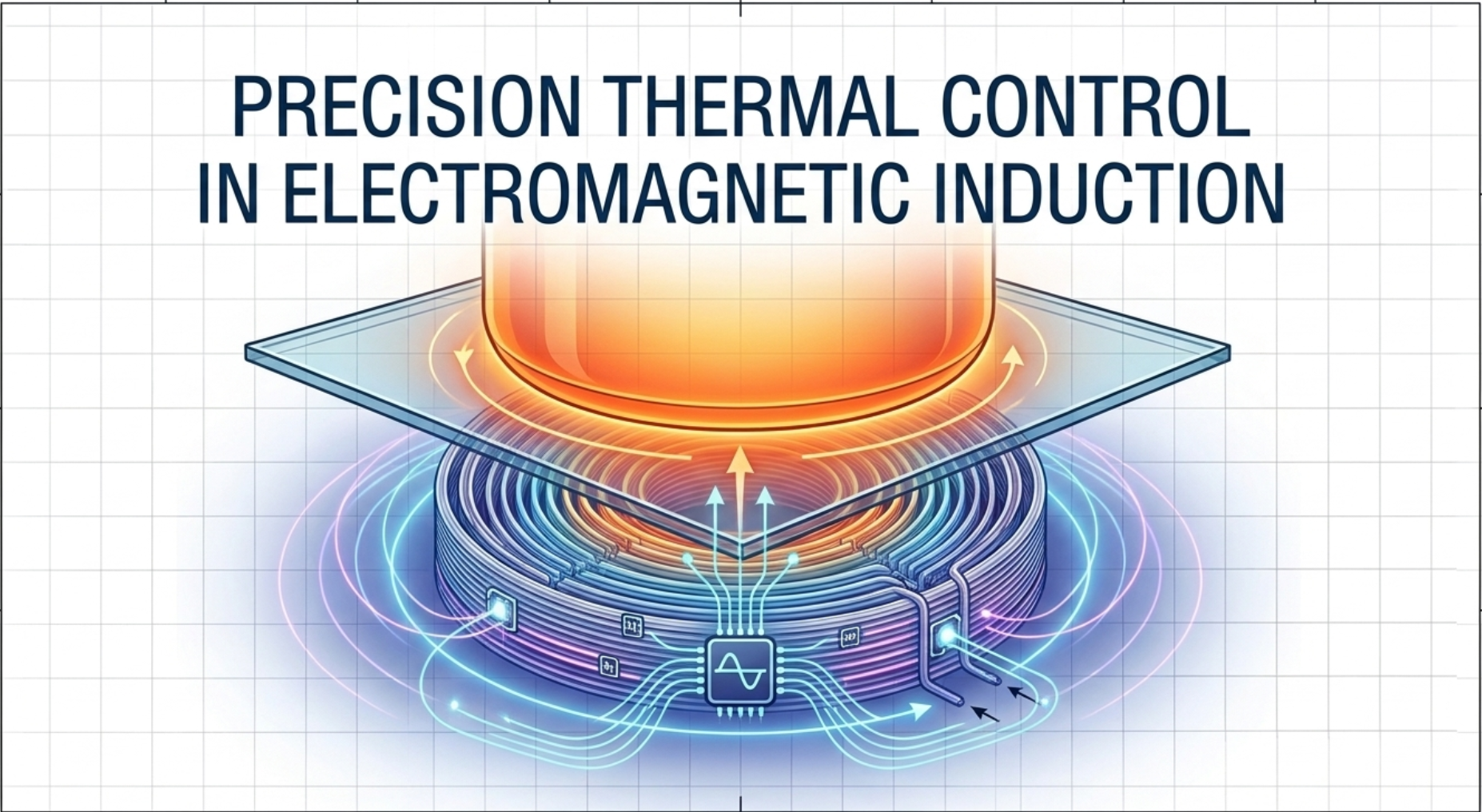
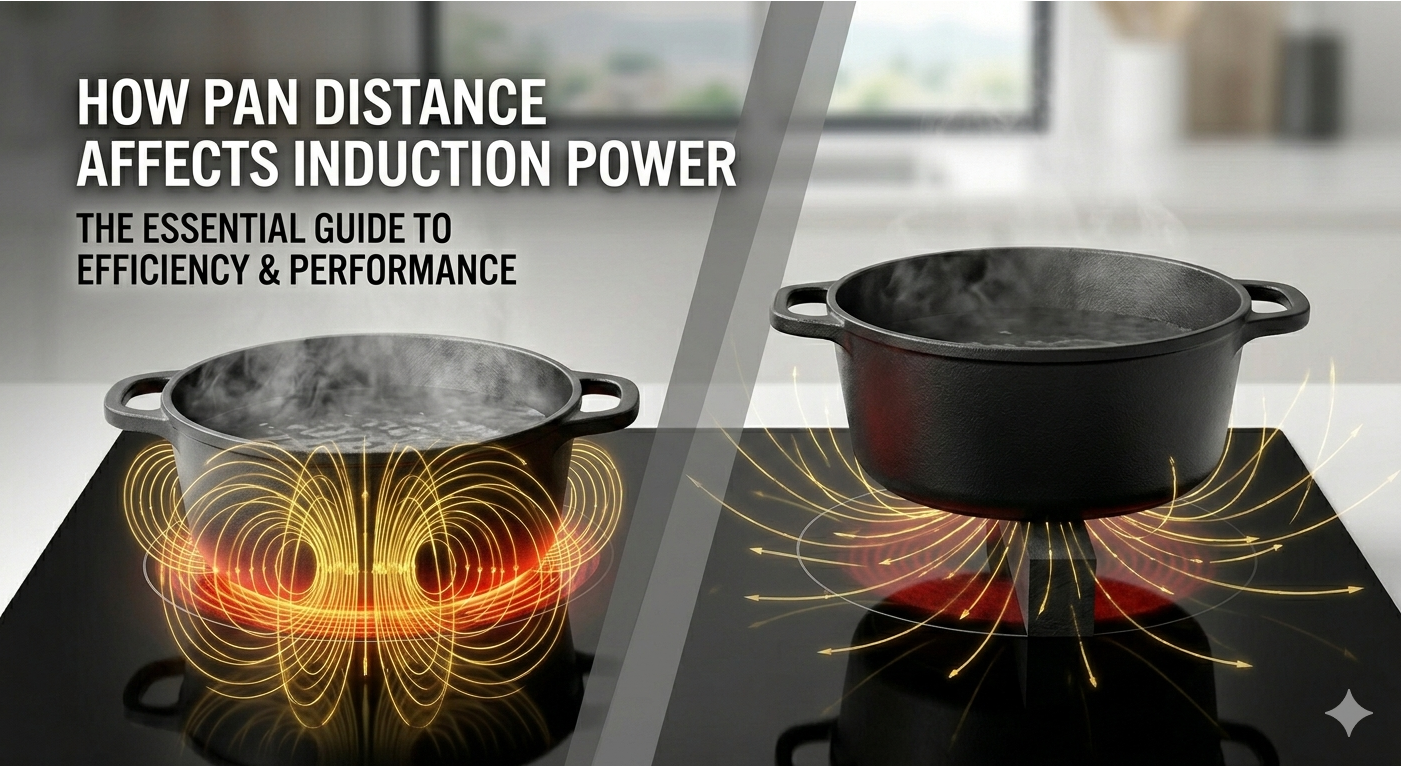
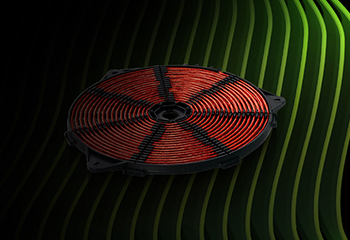
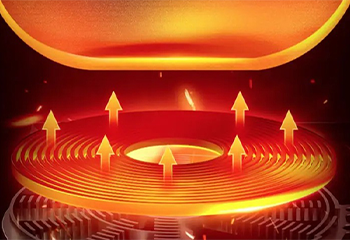
Induction technology is fundamentally different because it uses magnetism to generate heat. While gas and electric burners heat a surface that then heats the pan, an induction cooktop contains an electric coil that produces a magnetic field.
- Direct Energy Transfer: Energy from the magnetic field causes the pan itself to produce heat, meaning almost no energy is dissipated into the surrounding air.
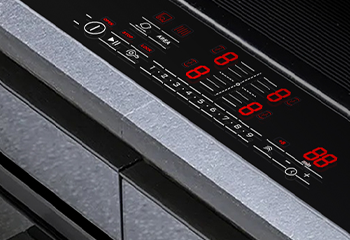
- Safety Features: These burners often include automatic shut-off and screen locking mechanisms. They will not even turn on unless a compatible pan is placed on the surface.
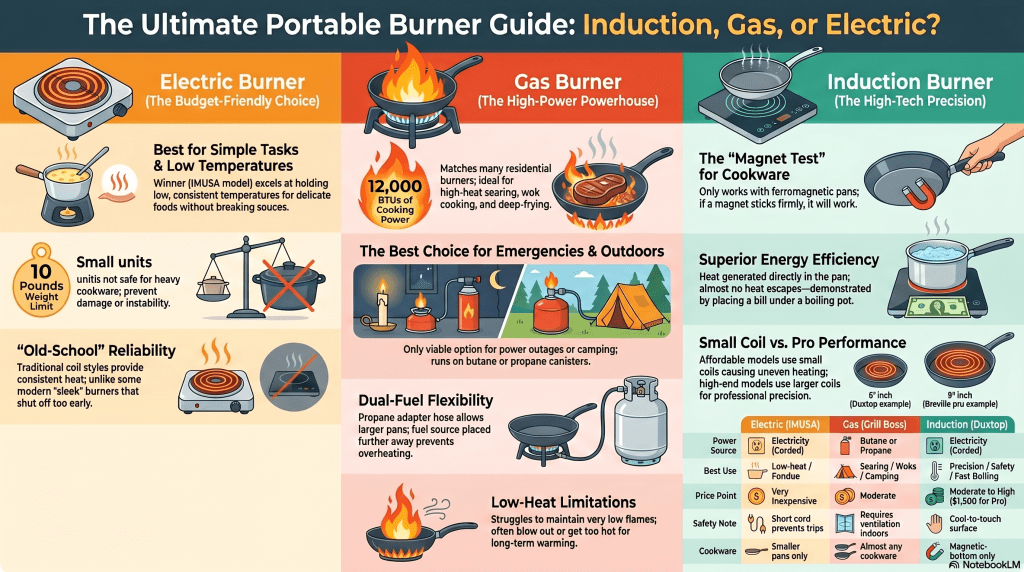
- The Magnet Test: To see if your cookware works with induction heating, simply stick a magnet to the bottom; if it sticks, it’s compatible.
2. Portable Burner Comparison: Gas vs. Electric vs. Induction
| Feature | Electric Burners | Gas Burners (Butane/Propane) | Induction Cooktops |
| Best For | Basic tasks & low budgets | High-heat searing & outdoors | Precision & efficiency |
| Power Needs | Requires Electricity | No electricity needed | Requires Electricity |
| Temperature Control | Good for low temps (fondue) | Difficult to hold very low flames | Exceptional precision |
| Portability | Very lightweight and tiny | “Suitcase” style portability | Sleek but can be bulky |
3. Top Performers in Our Testing
The Professional Choice: Breville PolyScience Control Freak
If you are looking for the absolute pinnacle of induction technology, this model is “out of this world”.
- Large Coil: It features a 9-inch coil, whereas most standard portable units only have a 6-inch coil.
- Speed: It was the only burner in our test to boil water faster than a traditional stovetop.
- Precision: It allows you to dial in a super-precise temperature, making it ideal for experienced cooks.
The Best Value: Duxtop Portable Induction
For most users, the Duxtop is the “Best Buy”.
- Performance: It can boil water in 24 minutes and hold cheese fondue for four hours without scorching.
- Pro-Tip: Since it uses a smaller 6-inch coil, we recommend using a 10-inch skillet rather than a 12-inch one to ensure even heating.
The Off-Grid Winner: Grill Boss Gas Burner
When power isn’t an option, gas is king.
- Dual Fuel: This model can use both butane and propane.
- High Power: With 12,000 BTUs, it is comparable to a powerful home stove burner and excellent for stir-frying in a wok.
- Safety Note: Always use gas burners in well-ventilated spaces and never leave a low flame unattended.
4. Maintenance and Longevity
- Cleaning: Induction technology is the easiest to clean because the surface stays relatively cool and is usually a smooth glass-top.
- Gas Maintenance: Look for gas burners where the top comes off entirely so you can scrub it in the sink. Always store gas burners in their provided cases to prevent dust from clogging the gas passageways.
- Electric Simplicity: While simple to wipe down, be wary of “sleek” electric models with safety cut-offs that may prevent water from reaching a full boil.
By understanding the mechanics of induction heating and the power of gas, you can choose the portable burner that perfectly complements your cooking style.