In the landscape of modern architecture, the transition toward a “wireless” environment is no longer limited to data. We are entering the era of the Cordless Kitchen, driven by the evolution of induction heating and high-power Wireless Power Transfer (WPT).

The Physics of “Invisible” Energy
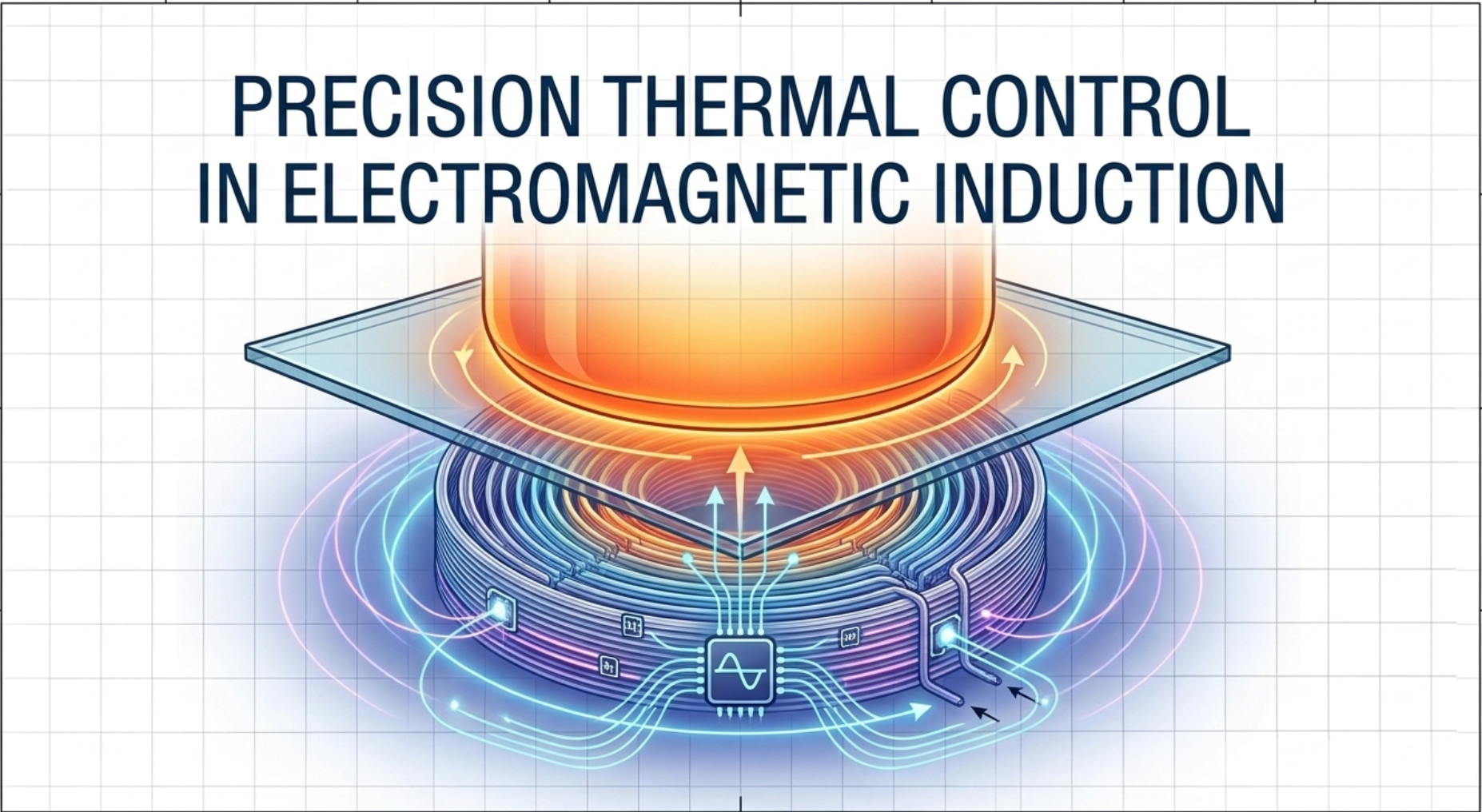
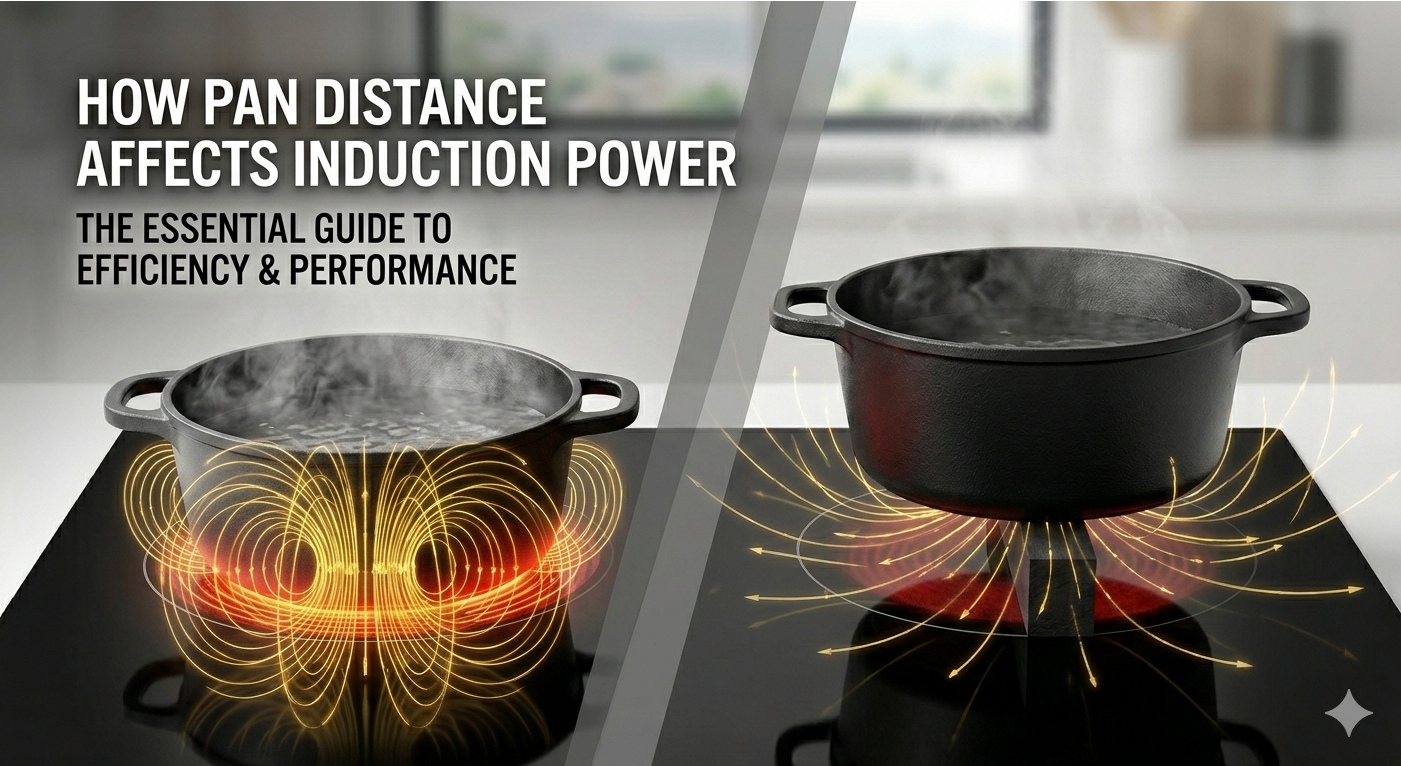
At its core, the new cordless paradigm shifts from simple induction cooking to a sophisticated energy carrier system. Unlike traditional induction where eddy currents directly heat a ferromagnetic pot, the WPC Ki Standard uses secondary coils to capture magnetic flux, converting it back into electricity to drive motors or heating elements.
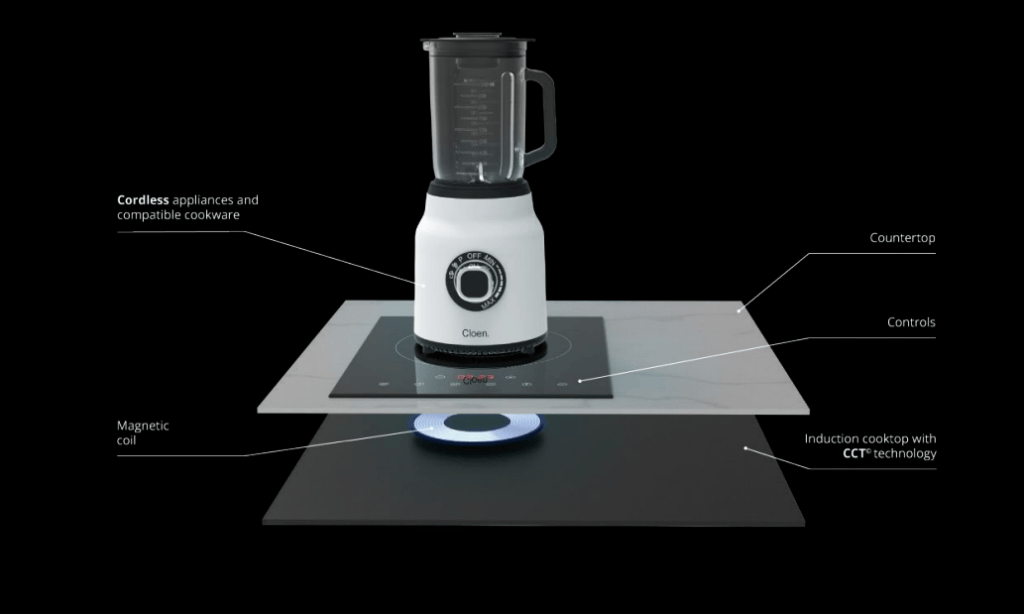
Through magnetic resonance, these systems achieve over 90% efficiency, even when transmitting through 30mm stone countertops. By adjusting the resonance frequency, the system minimizes impedance, making the “cordless appliance” a reality.
Security and Intelligence via NFC
Safety is the primary barrier to high-power induction. The Ki standard solves this through:
- NFC Communication: Isolating data from the 2000W power field to ensure interference-free control.
- Foreign Object Detection (FOD): Utilizing Power Loss Accounting (PLA) to shut down the system in milliseconds if a metal object, like a coin or key, absorbs energy.
Integration: Materials and Aesthetics
The ultimate goal of induction technology is the “Invisible Kitchen.” This requires precise material science. For instance, Sintered Stone (Rock Slab) has become the preferred material due to its ability to withstand thermal stress better than natural marble. Designers often use “back-milling” to reduce countertop thickness to the optimal 12mm for maximum coupling.
Beyond the Kitchen: A Multi-Scenario Future

While brands like Midea and Haier lead the home market, the implications for induction heating are profound in other sectors:
- Medical: Wireless surgical drills eliminate contaminated cables in sterile operating rooms.
- Industrial Cleanrooms: Sealed precision instruments receive power through stainless-steel-adjacent modules, ensuring zero dust emission.
As we look toward 2026, the integration of AI-driven dynamic power allocation will allow multiple devices to share a single surface, effectively ending the “last meter” power cord struggle once and for all.