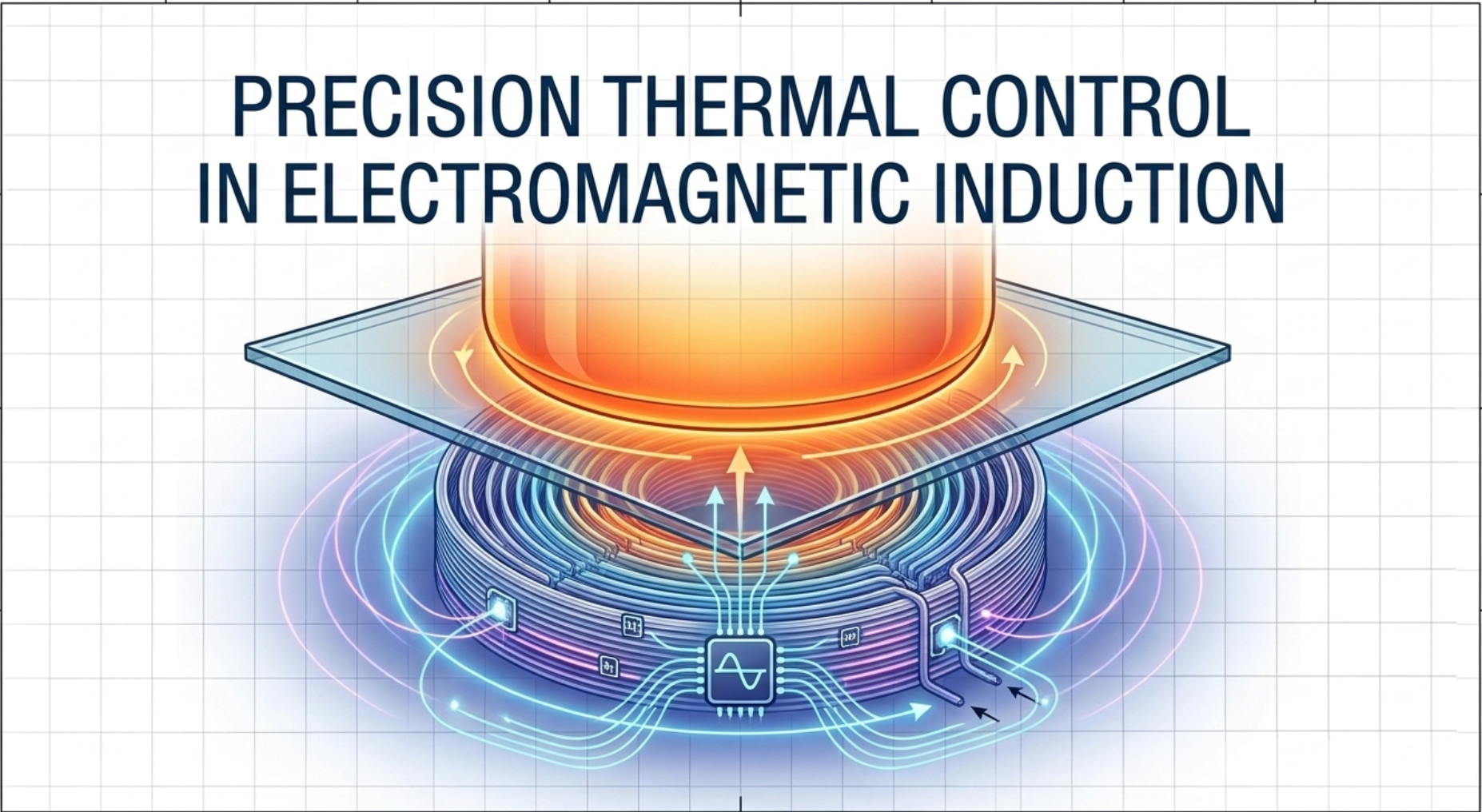
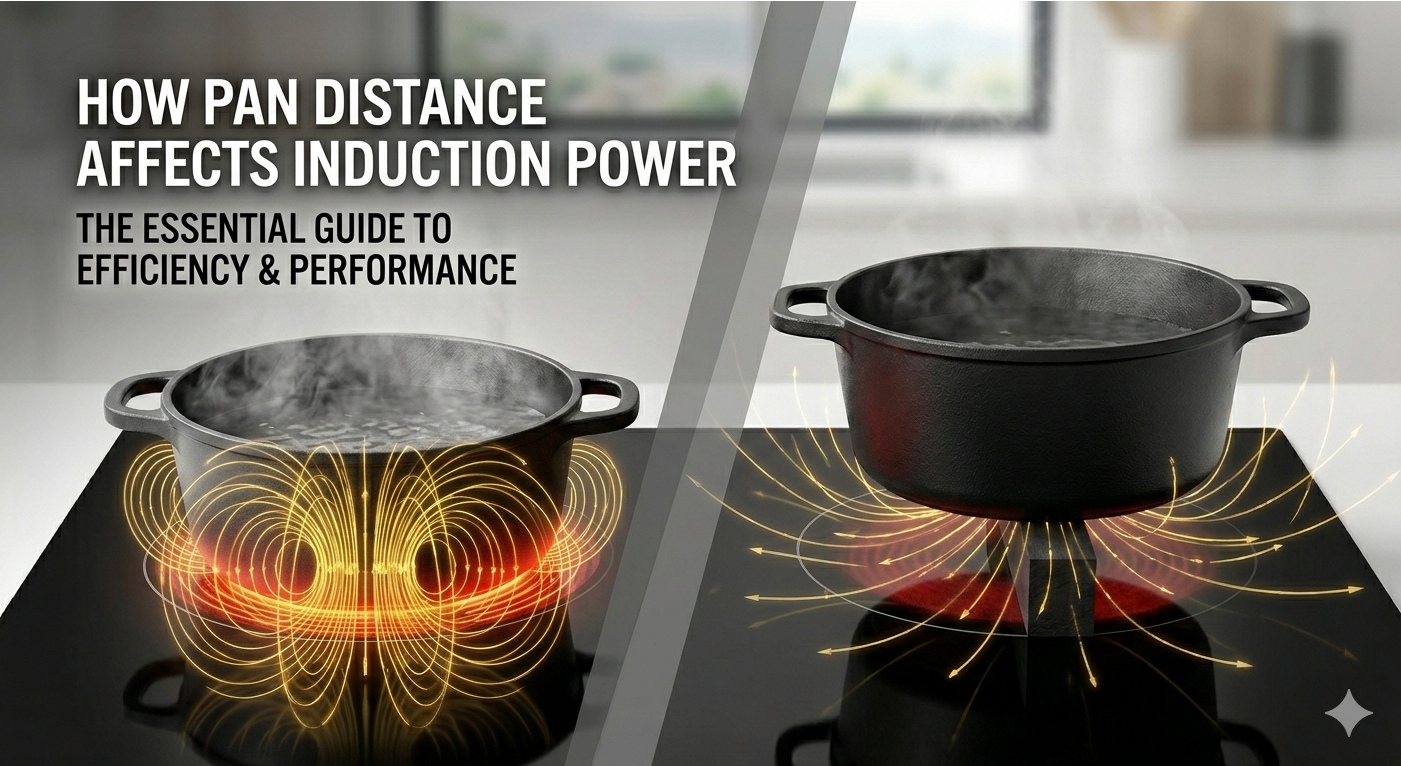
Induction technology is no longer confined to metal quenching or standard kitchen hobs. A profound shift is occurring where electromagnetic induction meets advanced material science, specifically in the realm of sintered stone and industrial stone processing.
How Induction Heating is Redefining “Heat”
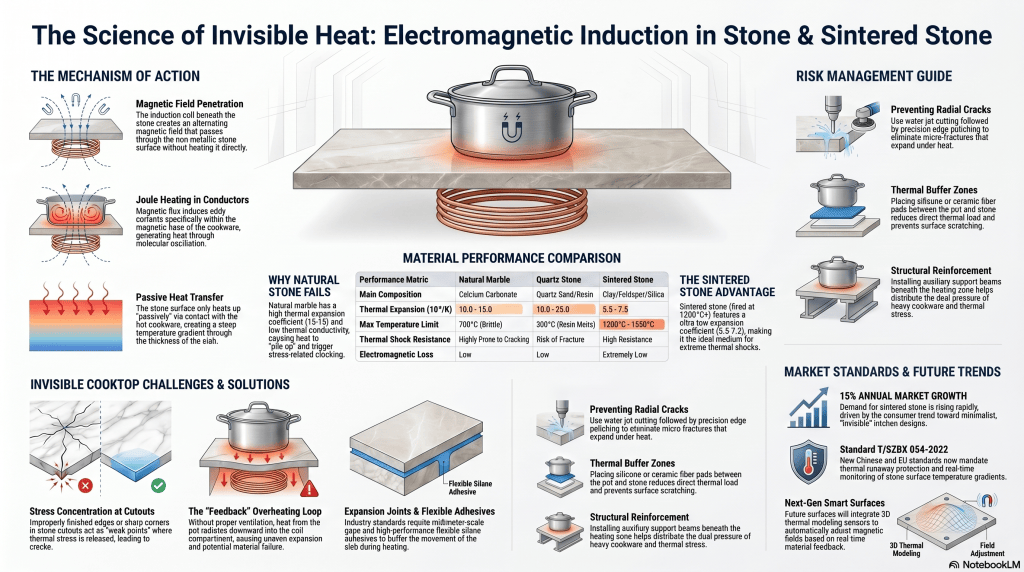
At its core, induction heating utilizes an alternating magnetic field to induce eddy currents within a magnetic conductor. Through molecular oscillation, Joule heat is generated internally. Unlike traditional resistive heating, this is “active control” rather than “passive transfer,” offering unmatched thermal efficiency and minimal thermal inertia.
The Rise of Invisible Induction Cooktops
The most significant commercial application in the stone sector is the invisible induction cooktop. By integrating induction coils beneath ultra-thin stone slabs, designers achieve a minimalist “stove-less” aesthetic.

Why Sintered Stone Wins Over Natural Marble
Not all stones are created equal for induction technology. Our research into material physics highlights why Sintered Stone is the industry standard:
| Performance Metric | Natural Marble | Quartz Stone | Sintered Stone |
| Thermal Expansion Coeff. | $10.0 – 15.0$ | $18.0 – 25.0$ | $5.5 – 7.5$ |
| Fire Resistance | 700°C (Brittle) | 300°C (Yellowing) | 1200°C+ |
| Thermal Shock Result | High Risk of Cracking | Prone to Breaking | High Resistance |
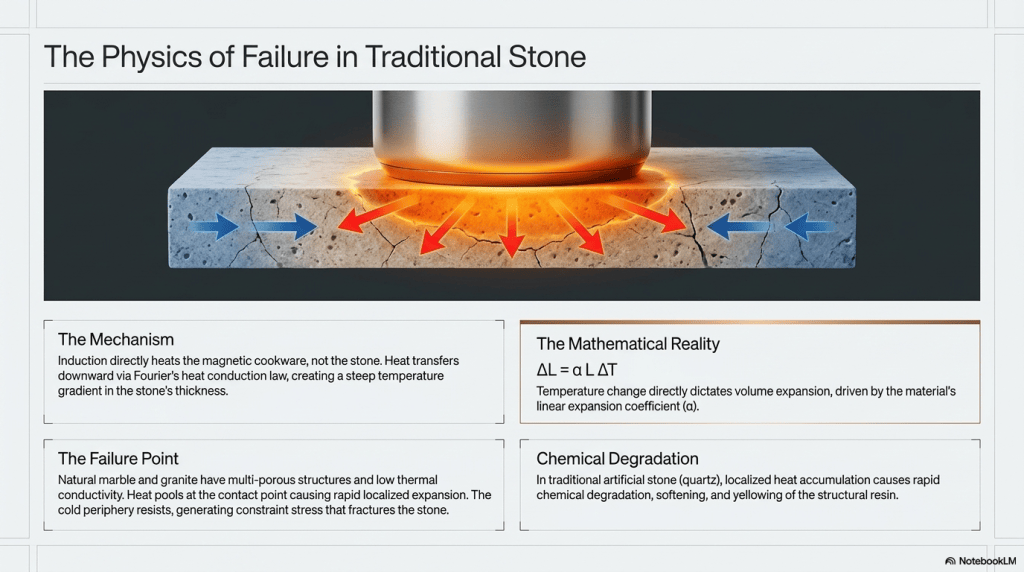
Sintered stone’s low expansion coefficient and high density allow it to withstand the steep temperature gradients required for high-power cooking without structural failure.
Overcoming Technical Barriers: Cracking and Heat Dissipation
Despite the durability of sintered stone, the “invisible” application faces challenges like stress concentration.
- The Solution: Industry leaders now utilize water-jet cutting to eliminate micro-cracks and implement expansion joints to allow for millimeter-level movement during heating.
- Heat Feedback: Advanced systems now include cooling convection in the coil compartment to prevent heat buildup at the bottom of the slab.
Industrial Applications: Beyond the Kitchen
Induction technology is also revolutionizing stone manufacturing:
- Automated Drying: High-frequency induction units can pre-heat stone slabs uniformly from the inside out, reducing warping during polishing.
- Composite Bonding: In marble-aluminum honeycomb panels, induction heating allows for “instant-on, instant-off” curing of adhesives, preventing color changes caused by prolonged heat exposure.

Conclusion: A Market in Transition
The market for induction-integrated stone is moving from early adoption to rapid growth, driven by a 15% annual increase in sintered stone demand. As standards like T/SZBX 054-2022 take hold, the focus shifts toward intelligent feedback systems—using sensors to create 3D heat maps and prevent overheating in real-time.