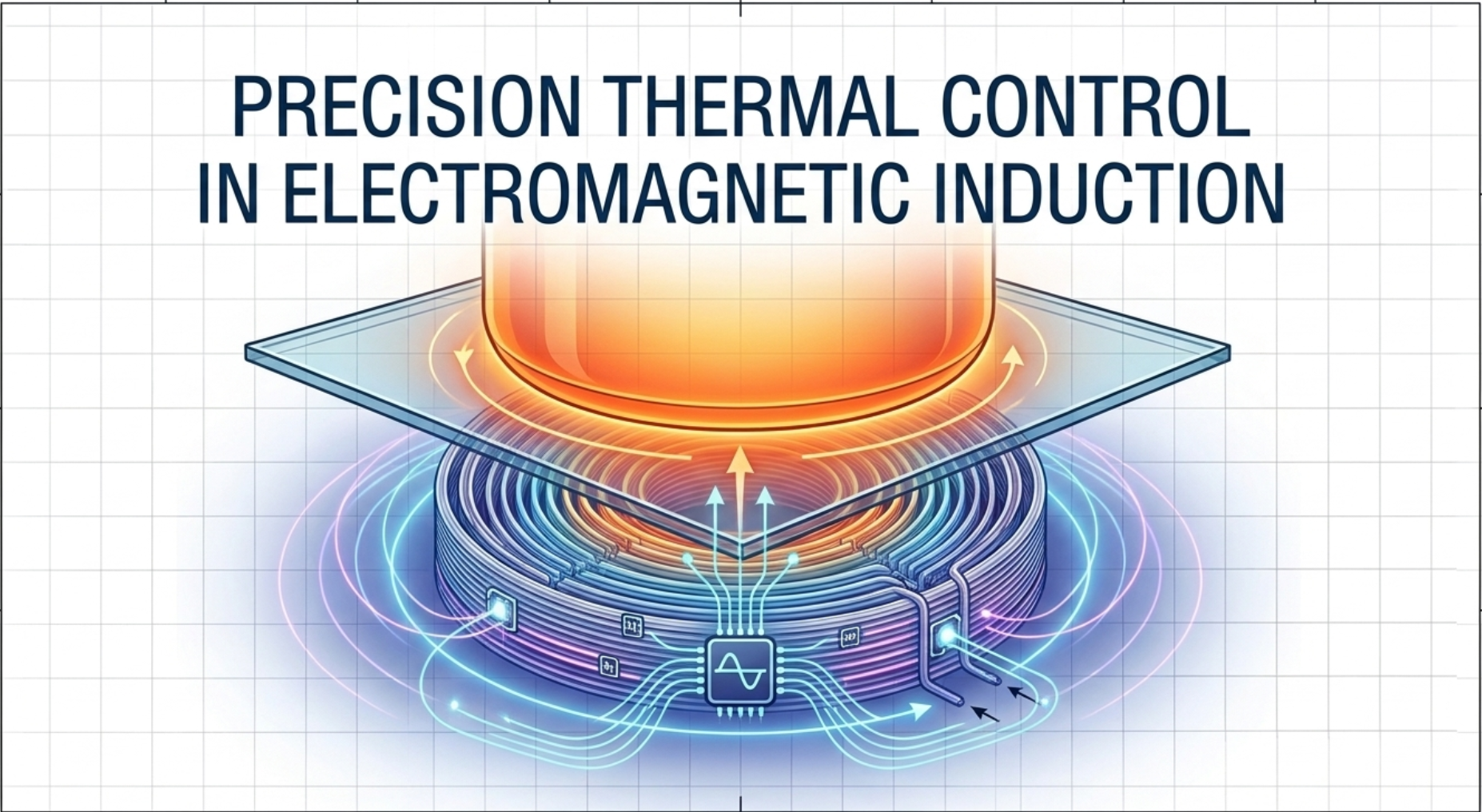
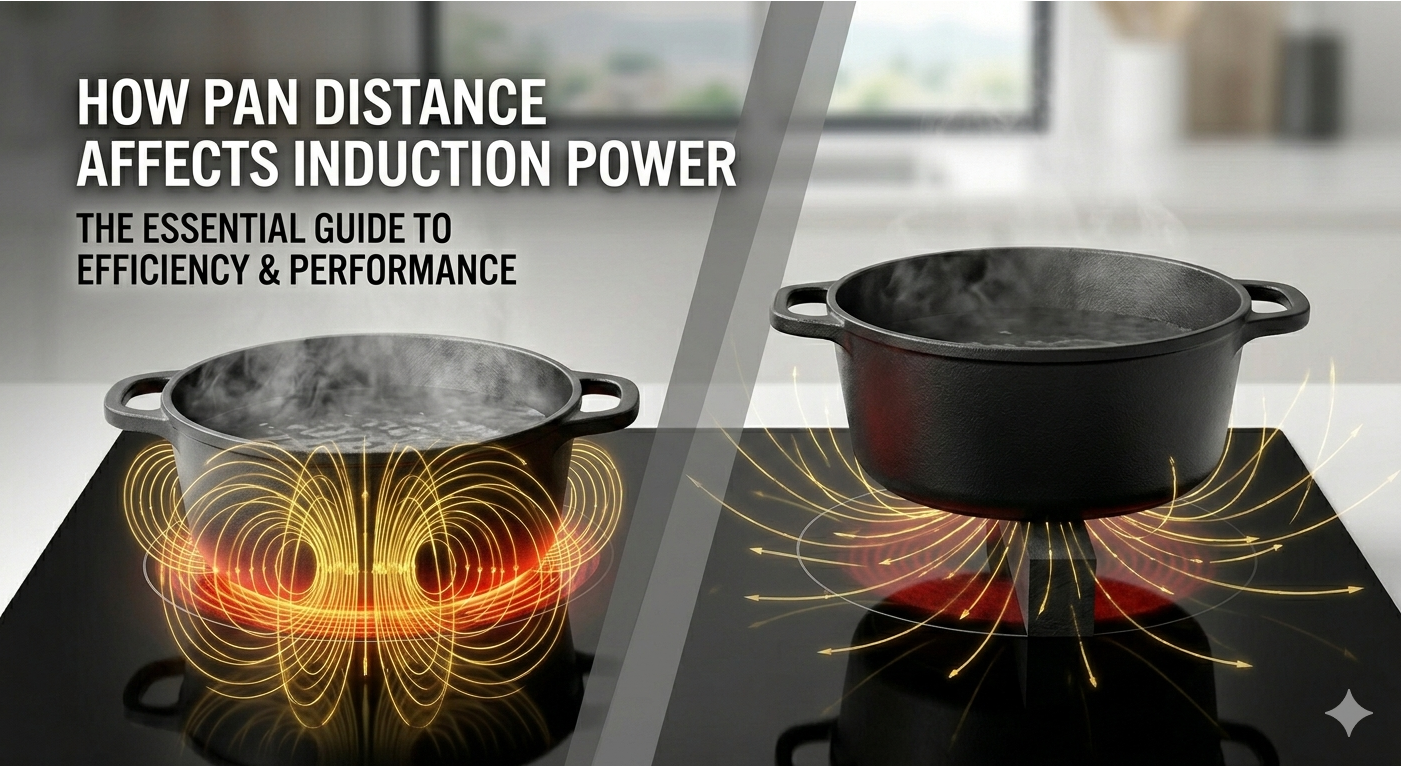
Full-surface induction (also known as Flex Induction or Zoneless Induction) represents the pinnacle of modern culinary engineering. By moving beyond the constraints of fixed cooking zones, it transforms the entire glass ceramic top into a continuous, intelligent heating canvas.
1. Technical Architecture: The Micro-Inductor Matrix
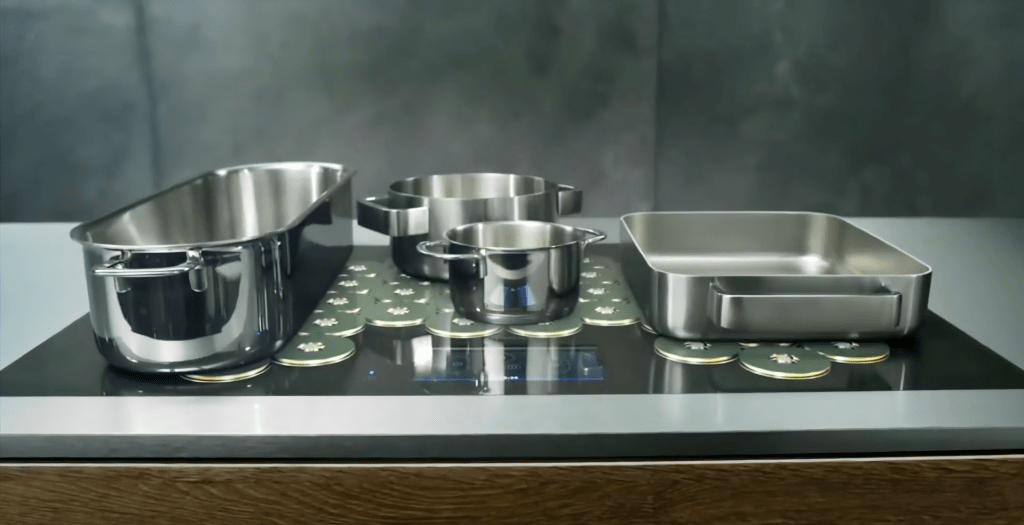
Unlike traditional cooktops with 4-5 large fixed coils, full-surface technology utilizes a micro-inductor matrix.
- The Hardware: Leading systems from Gaggenau or Thermador feature between 48 to 56 small, densely packed coils.
- Software-Defined Surface: Utilizing advanced algorithms (such as the E.G.O. G5 platform), the system performs real-time load recognition.
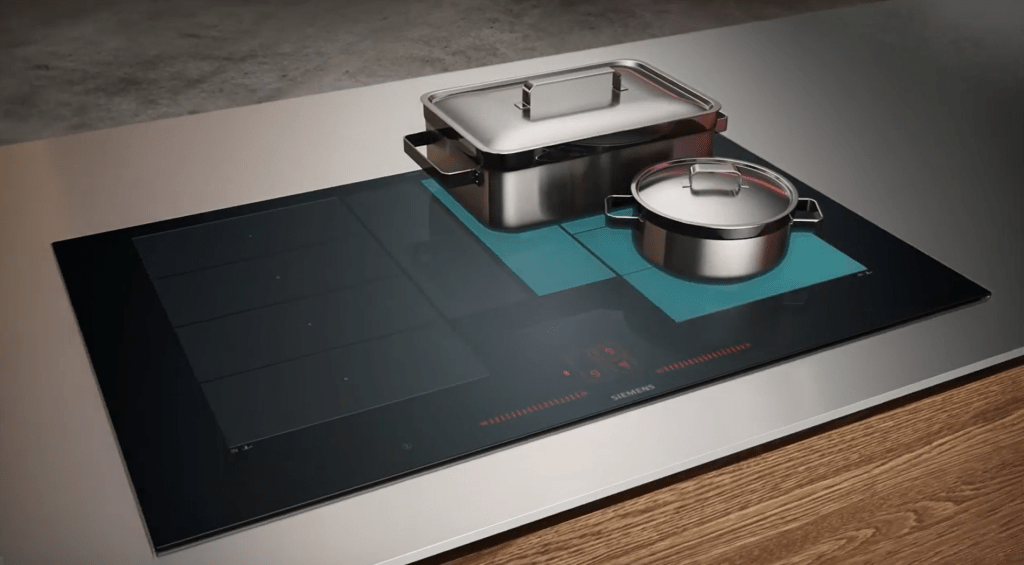
- Electromagnetic Precision: Only the specific coils covered by the cookware are activated, optimizing thermal efficiency and minimizing energy waste.

2. Core Features for the Modern User
The true value of “Induction Technology” lies in the physical freedom it provides:
- Free Positioning: Place up to 6 pots of any size or shape—from a tiny 10cm moka pot to a 35cm teppanyaki plate—anywhere on the surface.
- Intelligent Follow & Memory: If you move a pan to make room, the cooktop “remembers” your settings. The power level and timer migrate automatically with the cookware.
- Dynamic Cooking Modes: The surface can be logically divided into zones (e.g., High, Medium, and Keep Warm). Like a professional chef, you can simply slide the pan forward or backward to change heat intensity without touching a single button.
3. Brand Implementation: Miele, Gaggenau, and AEG
- Miele (KM 7897): Features SilentMove technology, a special coating that allows pans to glide silently, paired with the intuitive SmartSelect interface.
- Gaggenau (CX Series): Often considered a “trophy appliance,” it features a high-resolution TFT touch display that maps the exact position of every pot in real-time.
- AEG (TotalFlex): Utilizes ActiveTouch—the corresponding slider controls light up automatically the moment a pot is placed on the surface.
4. Engineering Challenges: Uniformity and Power
Despite its brilliance, full-surface induction faces significant engineering hurdles:
- Heat Uniformity: To avoid “pixelated heating” (tiny cold spots between small coils), manufacturers must use sophisticated overlapping magnetic field designs.
- Power Budgeting: With a total load often exceeding 11 kW, the system manages frequency synchronization to prevent beat frequency interference (that annoying whistling sound).
- Durability: Constant sliding requires extreme scratch resistance. Look for premium finishes like Miele’s DiamondFinish or AEG’s SaphirMatt.
Conclusion
Full-surface induction is the ultimate evolution from “hardware-aligned” to “software-adaptive” cooking. For the high-end kitchen, it offers the ultimate luxury: the freedom to focus on the food, not the appliance.