The modern kitchen is no longer a collection of isolated appliances; it has evolved into a sophisticated IoT-based ecosystem. At the forefront of this evolution is the synchronized linkage between multi-zone induction cooktops and smart extraction hoods. By leveraging real-time data—power loads, temperature spikes, and cookware position—these systems transition kitchen management from manual intervention to autonomous execution.
1. The Hardware Backbone of Induction Heating
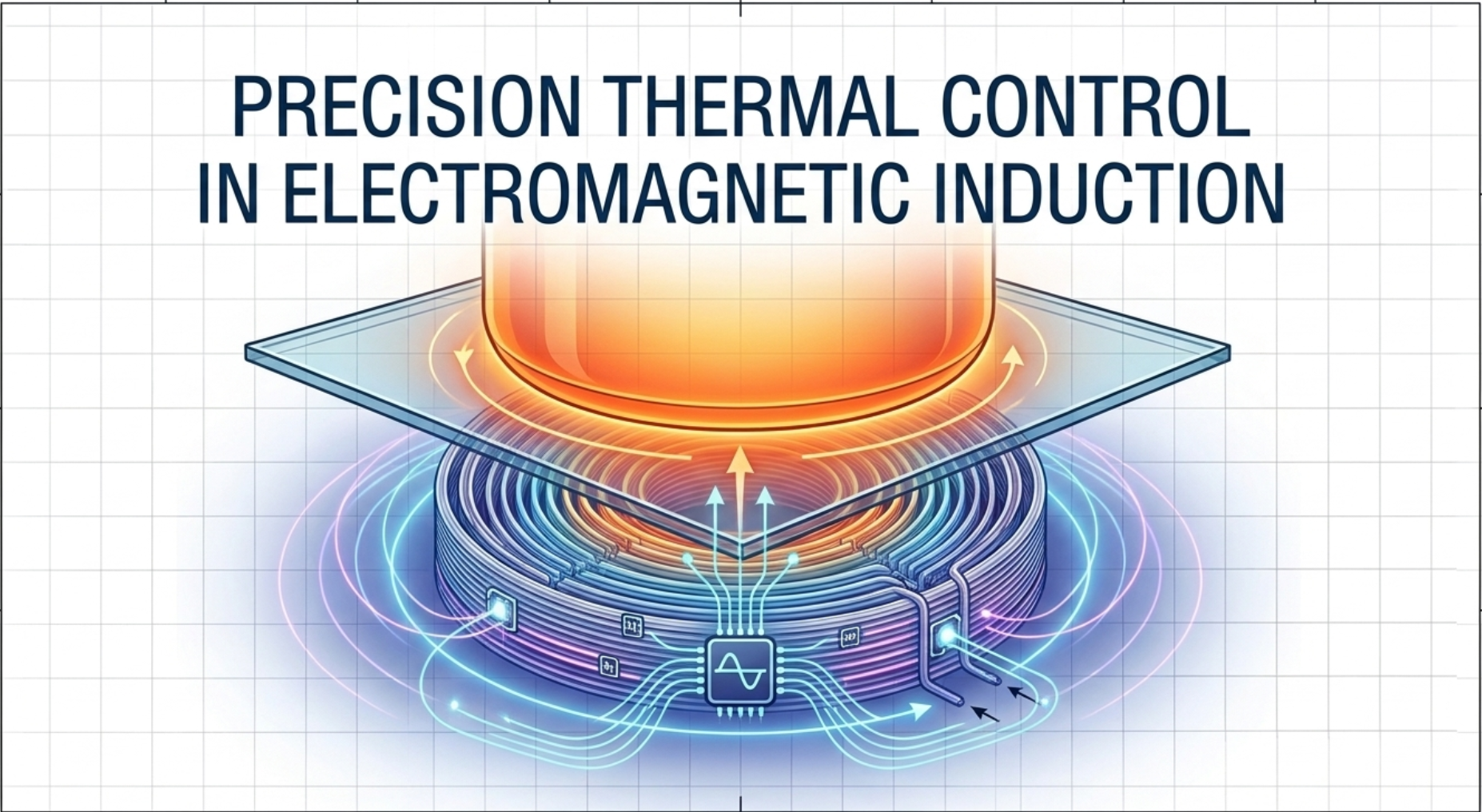
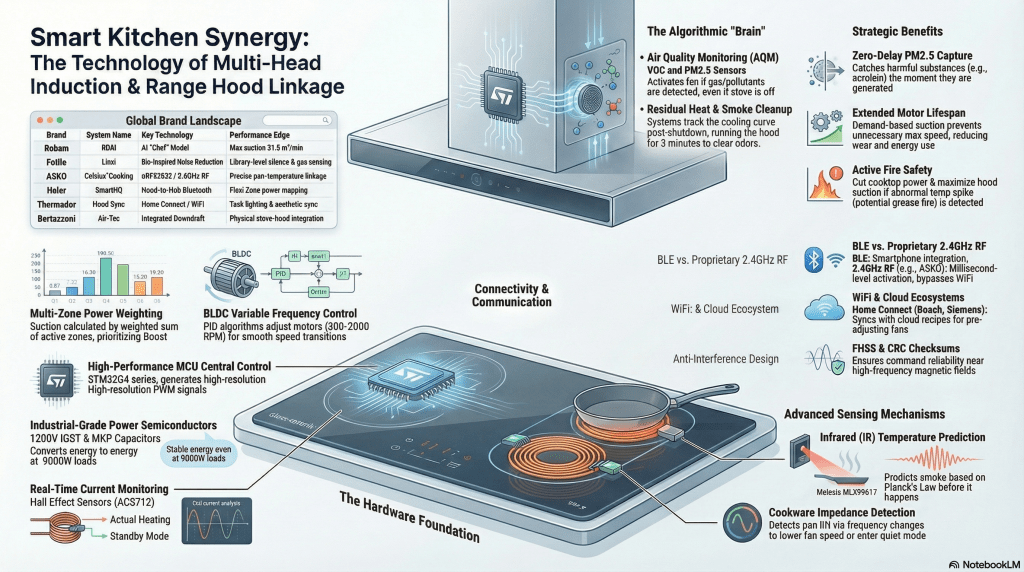
The efficiency of any induction cooktop starts with its internal architecture. High-performance multi-zone systems require precise power distribution to manage multiple induction coils simultaneously without overloading the domestic circuit.
High-Resolution Power Control
Modern systems utilize high-performance MCUs (Microcontroller Units), such as the STM32G4 series. These chips generate high-frequency PWM (Pulse Width Modulation) signals, which act as the “heartbeat” of the cooktop. This precision allows the system to switch instantaneously between delicate “Simmer” settings and high-intensity “Boost” modes.
Industrial-Grade Components
To handle the thermal challenges of a high-output load (often reaching 9000W), premium induction technology relies on:
- IGBT Modules: Utilizing 1200V power semiconductors to ensure switching stability and durability.
- Resonant Capacitors: High-quality MKP-type capacitors minimize energy loss and optimize Electromagnetic Compatibility (EMC), reducing interference with other kitchen electronics.
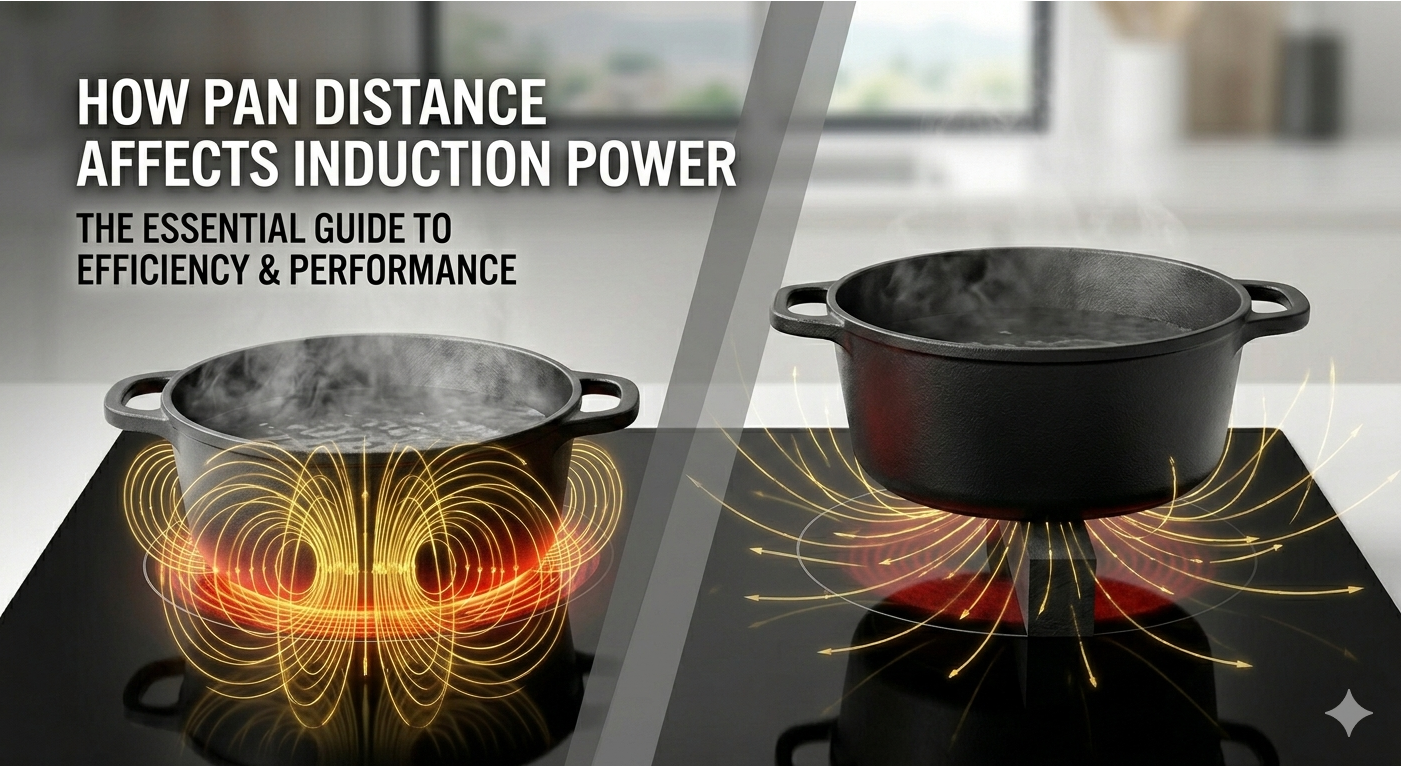
- Current Sensing: Hall-effect sensors provide real-time feedback, allowing the hood to “read” the cooktop’s actual energy output rather than just the user’s setting.
2. Wireless Connectivity: Protocols for the Smart Kitchen
Reliable induction technology requires a robust communication link that can withstand the high-frequency electromagnetic interference inherent in induction heating.
- BLE & Proprietary RF: Brands like Samsung and Haier utilize Bluetooth Low Energy (BLE) for app integration. However, professional manufacturers like ASKO often employ 2.4GHz proprietary RF protocols to ensure “millisecond” latency, ensuring the hood reacts the moment the pan hits the glass.
- Matter & Home Connect: The industry is moving toward the Matter 1.2 protocol, aiming for cross-brand interoperability. Through WiFi-based ecosystems, the extraction rate is not just reactive but predictive, syncing with digital recipes to prepare for steam-heavy cooking phases.
3. Advanced Perception: Sensing Beyond the Surface
The “intelligence” of the linkage depends on sensor fusion. Advanced induction heating systems have moved beyond basic power triggers to predictive smoke management.
Infrared (IR) Temperature Monitoring
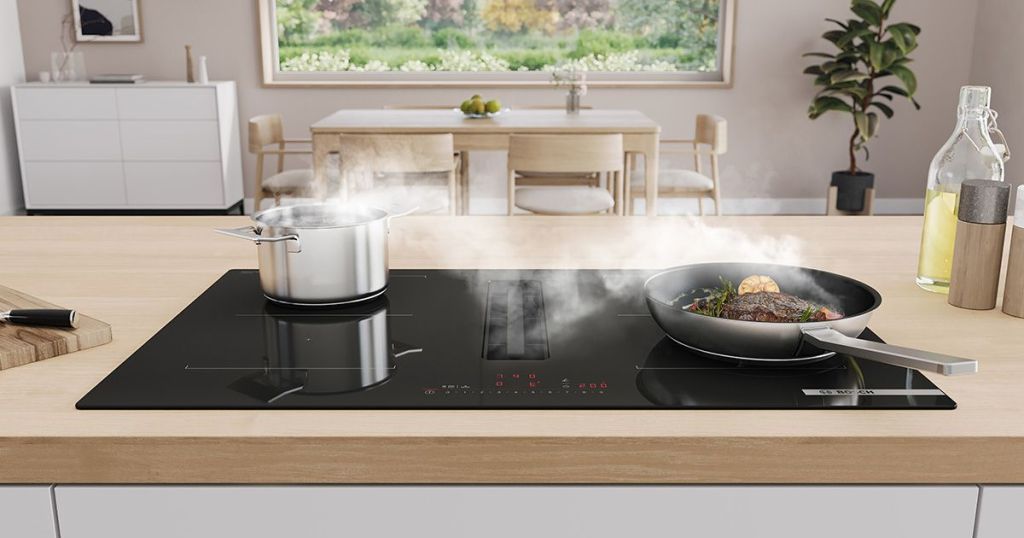
Unlike traditional sensors located under the glass, which suffer from delayed readings due to the glass’s thermal mass, IR sensors monitor the cookware directly. By detecting the specific infrared radiation emitted by the pot, the system knows the exact temperature of the cooking surface.
When the system detects a rapid rise toward high searing temperatures, the hood preemptively increases the BLDC motor speed. This “zero-latency” response captures oil smoke before it can disperse into the living area.
4. Algorithmic Logic: Multi-Zone Power Mapping
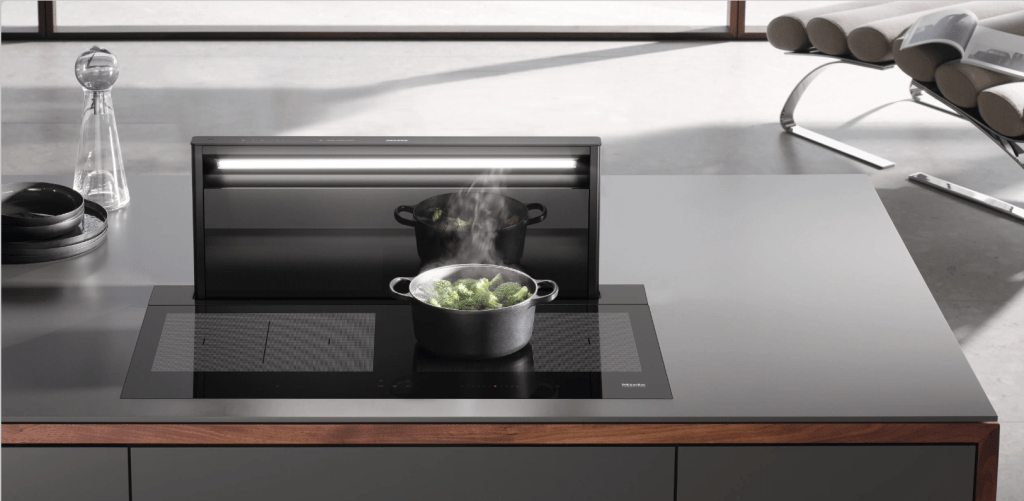
Managing a four-head induction cooktop with a single hood requires a “many-to-one” logic. The system doesn’t just look at the highest power zone; it calculates a weighted average of all active zones.
This algorithm balances thermal efficiency and acoustic comfort. By using PID (Proportional-Integral-Derivative) control, the motor adjusts its RPM (Revolutions Per Minute) smoothly. This eliminates the annoying noise spikes found in traditional hoods, maintaining a quiet environment for conversation while maintaining maximum air purity.
5. Global Brand Innovations in Induction Technology
- ASKO (Celsius°Cooking™): Features smart cookware that communicates directly with the hob to maintain temperatures within a single degree of accuracy.
- Robam (ROKI System): Employs AI algorithms to predict “smoke peaks,” offering ultra-high extraction rates specifically designed for high-heat stir-frying.
- Bosch/Siemens: Focuses on the “Hood Sync” ecosystem, where ventilation and task lighting adjust automatically based on the intensity of the induction zones.
Conclusion: The New Standard for Healthy Living
The integration of induction technology with smart ventilation is more than a luxury; it is a critical improvement for indoor air quality. By capturing harmful particles at the source, these systems protect respiratory health while optimizing energy consumption. As global standards like Matter become more common, the synchronized smart kitchen will become a standard feature for the modern, sustainable home.